For those planning to rebuild a house in their hometown or renovate the interior of a factory building, choosing the right roofing material directly affects living comfort and maintenance costs for decades to come. Due to their lightweight, portability, corrosion resistance, and protection against moisture and termites, resin roof tiles are undoubtedly more practical and superior to traditional clay tiles and color-coated metal roofing materials. However, the quality of products on the market today varies widely, with products of differing grades available, so how to avoid substandard, low-quality products has become the most pressing concern for consumers.
When Choosing Resin Roof Tiles, Should You Focus on Thickness or the Formulation?
Too many salespeople tell beginners that “the thicker, the better,” but this statement is only half-true. While simply increasing the thickness can indeed improve rigidity, if the resin formulation is incorrect, the board will still break easily no matter how thick it is. What really matters is whether the raw material is imported ASA engineering resin, rather than recycled material. Sheets made from recycled material may look bright and attractive at first, but they’ll fade and turn yellow within half a year, and they’ll warp if left in the sun for too long. During the procurement phase, don’t rely solely on verbal assurances. Ask the supplier to provide a quality inspection report for the raw materials, or use a knife to scrape the broken area on the spot to check whether the color is consistent and uniform. If the break surface appears dark or contains impurities, it indicates the addition of inferior fillers, and the product will certainly not last nine years.
Thickness is actually a matter of minimum requirements. For roofs with steep slopes and wide spans, it is essential to select 3.0-millimeter or even thicker specifications; otherwise, on cloudy or rainy days, the roof will appear soft and flimsy, and walking on it may even pose certain safety hazards. However, for small-span projects converting flat roofs to pitched roofs, the 2.5-millimeter specification is perfectly sufficient, and there’s no need to spend extra money unnecessarily.
How to Identify Signs of Aging When Selecting Resin Roof Tiles
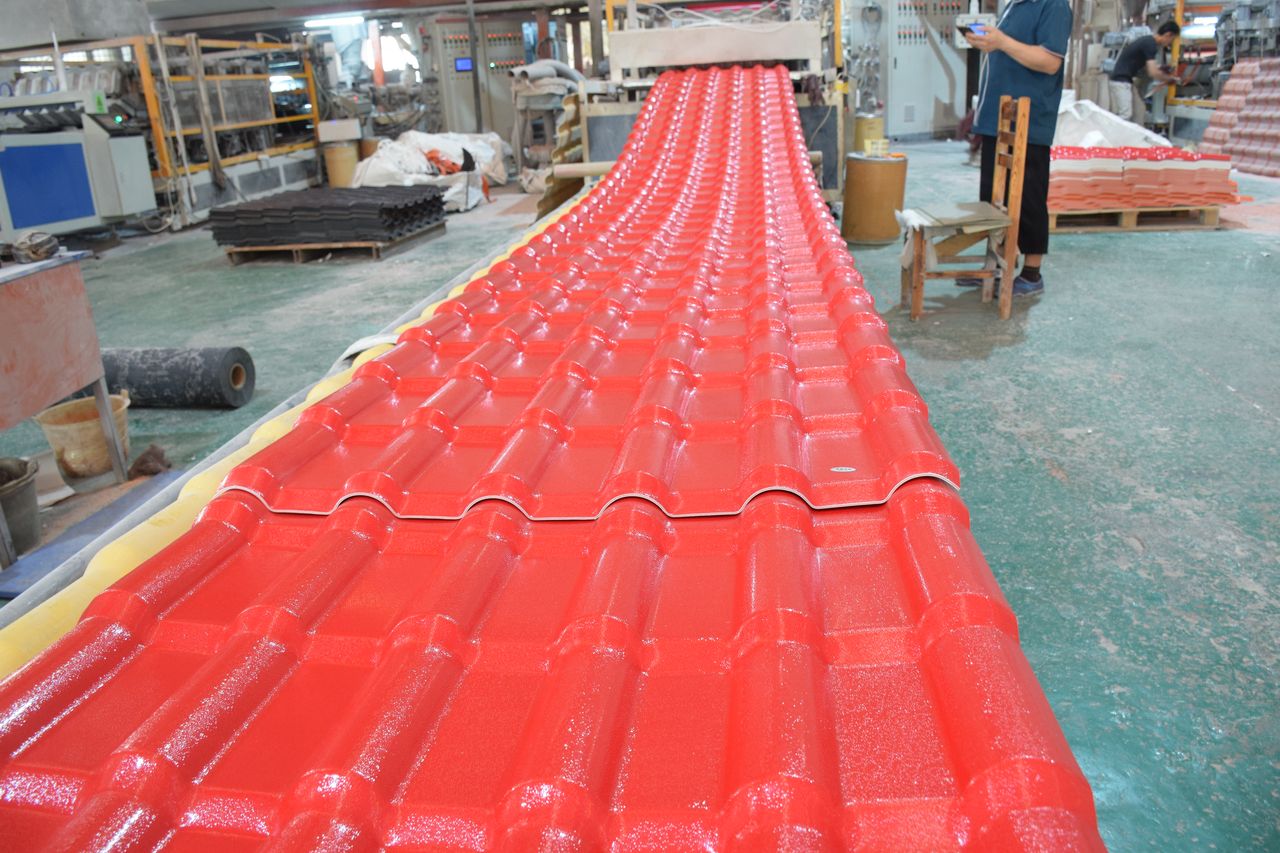
Aging is the biggest enemy of resin roofing tiles. Many tiles on the market look beautiful right after installation, but as soon as they’re exposed to the scorching summer sun, fine cracks begin to appear on the underside. Is there a simple way to tell the difference? Ask specifically whether the product has undergone outdoor anti-aging testing. Reputable manufacturers will clearly state the number of hours the product has undergone xenon lamp aging testing. Generally, high-quality resin can withstand, endure, and hold up for 1,500 hours or more under such conditions.
There’s also this simple yet effective trick: check the back of the tile. The underside of high-quality resin tiles is usually matte; it feels sandblasted to the touch, isn’t slippery, and is less prone to condensation. If the surface is glossy, it’s often because the manufacturer cut corners by skipping the base treatment—and such tiles are prone to condensation and dripping. In addition, take a look at the cut edges of the tiles. Neat and smooth edges indicate high-quality products made with precision molds, while rough edges or flash indicate severe mold wear, which can lead to leaks later on.
Beware of Low-Price Traps When Buying Resin Roof Tiles
If the price is significantly lower than the market rate, don’t be tempted. The main cost of resin roofing tiles comes from raw materials; if the quoted price is far below the industry average, it’s highly likely that PVC sheets have been used as a substitute for ASA resin, or that a large amount of calcium carbonate powder has been mixed into the resin. These tiles feel flimsy and sound dull when tapped, and they’ll crumble within two years.
Buying a bunch of cheap, substandard products that require rework later on isn’t as good as choosing a reliable brand from the start. During installation, you also need to pay attention to the accessories—details like screws and edge strips. If the seller substitutes stainless steel screws with plastic expansion tubes, a strong wind will surely blow the roof tiles right off. High-quality resin roofing tiles—from the main tiles to the accessories—are made entirely of metal or engineering-grade plastic; that’s what constitutes a genuine, reliable product.
Keywords: Choosing Resin Roof Tiles