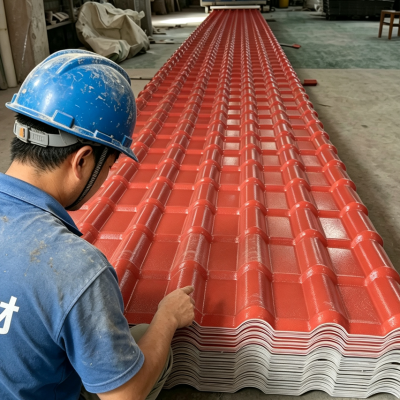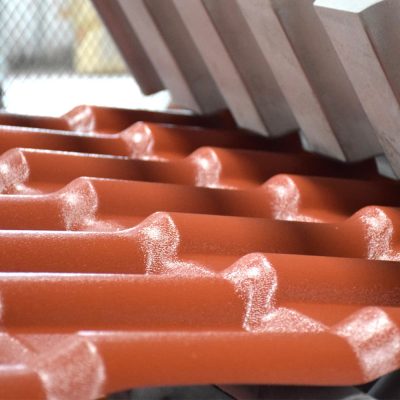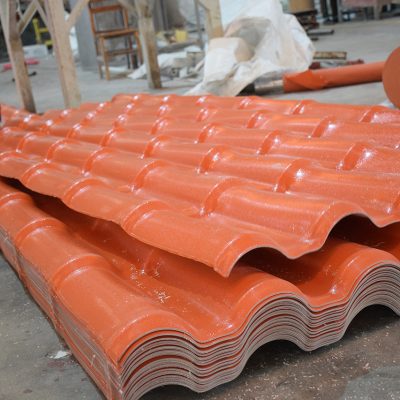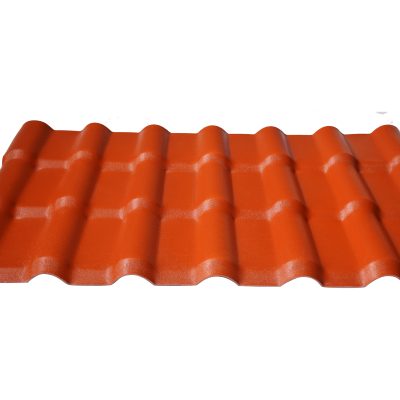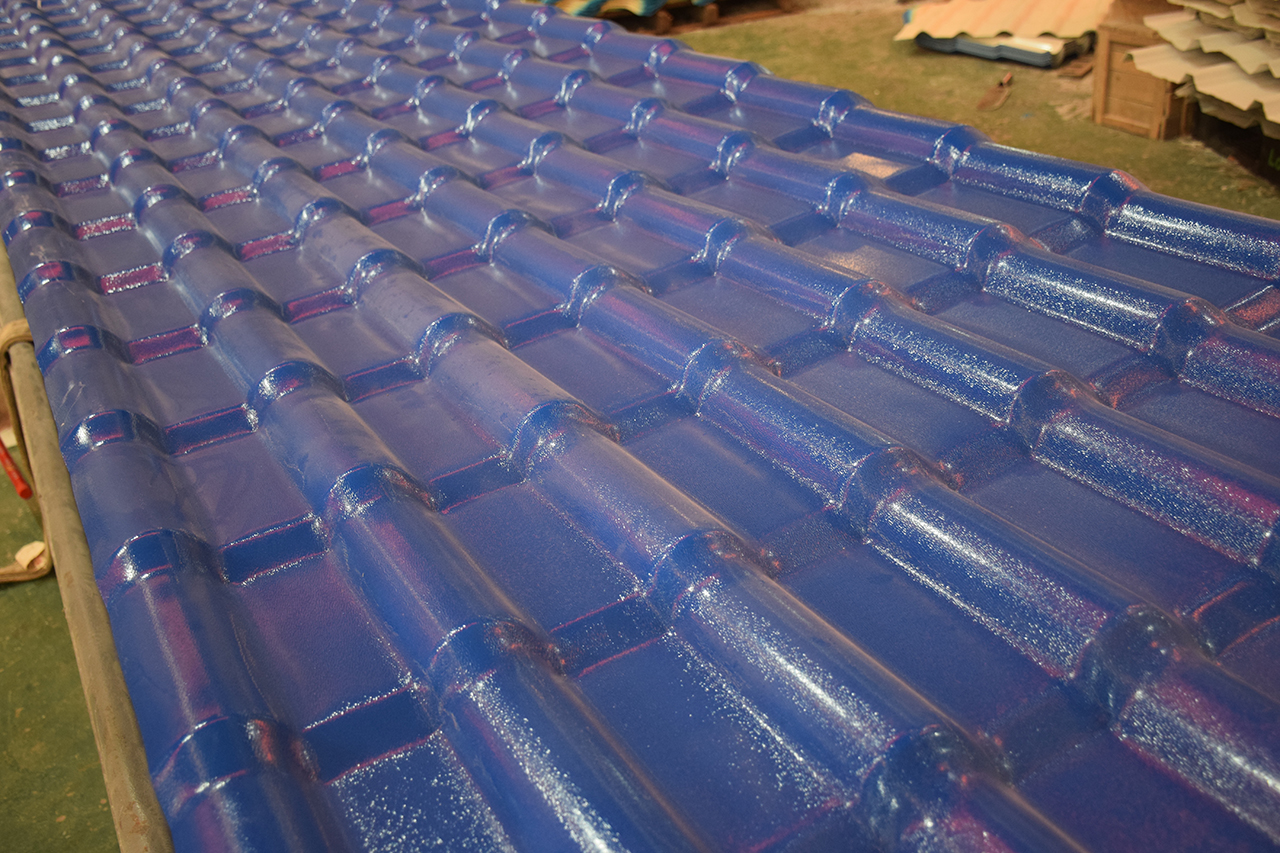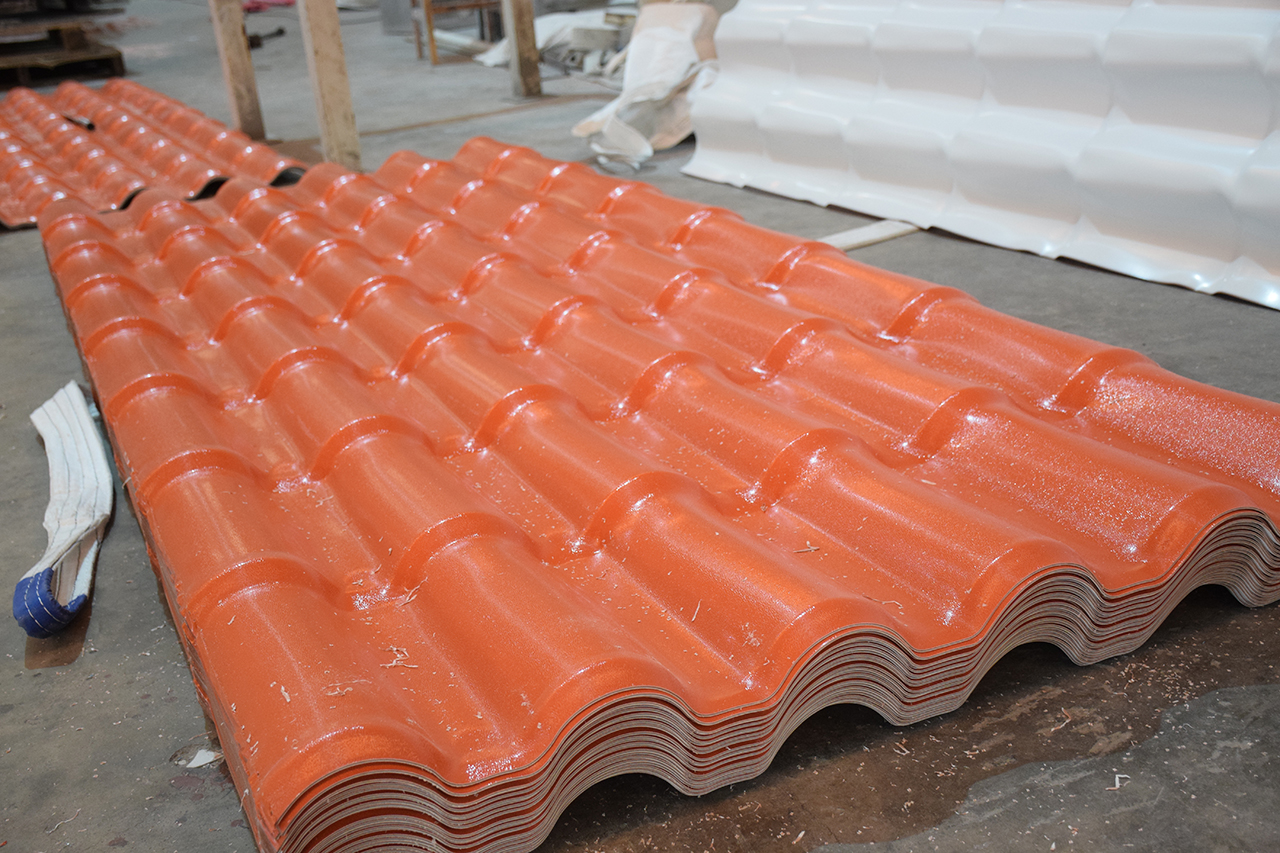
Every typhoon season, news reports frequently show numerous cases of roofs being torn off by strong winds in coastal areas, leading many people to worry: Are lightweight resin roofing tiles unsafe in regions prone to typhoons? In fact, as long as you choose the right product and ensure it is installed according to specifications, resin roofing tiles can fully meet the wind-resistance requirements of coastal areas.
The wind-resistant performance of resin roofing tiles does not primarily depend on the weight of the tiles themselves, but rather on the overall fastening system and structural design. Properly designed wind-resistant resin roof tiles feature a deeper corrugated profile. The effective width of the tiles is precisely matched to the spacing of the purlins, and each tile is securely fastened to the purlins with multiple specialized self-tapping screws, forming an integrated load-bearing system. In the industry, qualified resin tile roofs can withstand loads exceeding 1 kPa in standard wind-lift resistance tests, making them fully capable of withstanding the direct impact of a Category 12 typhoon.
Many cases people have seen of resin roof tiles being blown off by the wind are essentially caused by improper installation: either the spacing between the purlins is too wide—exceeding the standard requirement of 660 mm—resulting in insufficient support for the tiles in the middle; or the number of fastening nails is too low—only 2–3 nails per square meter, far short of the required 5–6; in other cases, workers, seeking to cut corners, fail to install the tiles in a direction opposite to the prevailing wind. When strong winds blow, airflow penetrates directly through the gaps between the tiles, making them prone to being blown off.
For areas prone to typhoons, there is a specialized, reinforced installation plan: additional wind-resistant clips can be added at the overlaps of the tiles, the density of fastening nails at the eaves can be doubled, and wind-resistant strips can be installed if necessary. Resin tile roofs constructed according to these standards remain intact even after multiple typhoons have passed through, so there is absolutely no need to worry about safety issues.