Many users find: the same resin tile, some roof with ten years intact, some two or three years on the leakage deformation. The difference often lies inQuality of construction. This article summarizes the resin tile construction in10 Common Mistakes, to help you avoid the pitfalls.
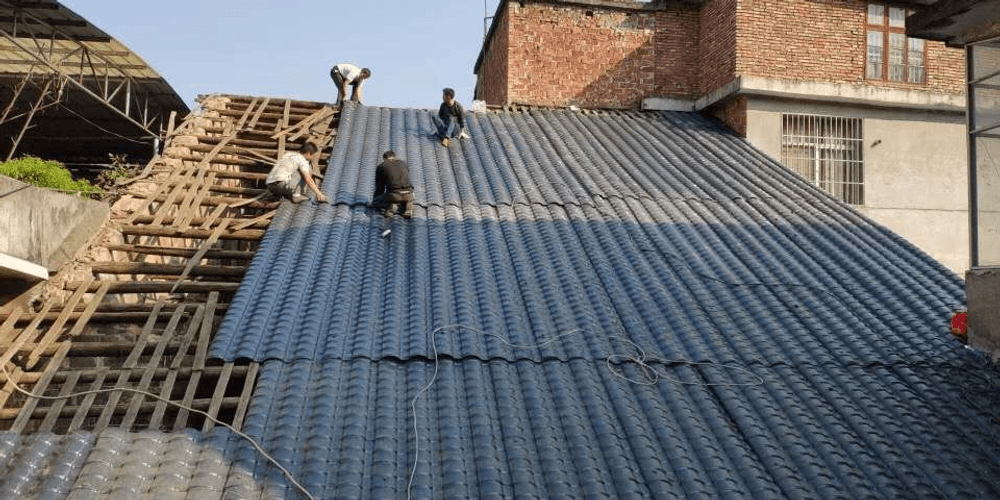
Mistake #1: Roof slope is too small
-
manifestations: Slope <15°, very slow drainage, long-term water accumulation at the lap.
-
result: Water seeps into the lap joints and leaks inside the house; water freezes and expands in winter, damaging the shingles.
-
proper practiceResin tiles are suitable for slopes of 15°-80°, preferably not lower than 15°. If you have to do a gentle slope, you need to do a full pavement waterproof layer underneath.
Mistake 2: Purlin spacing is too large
-
manifestations: The shingles visibly sagged and rippled when stepped on.
-
result: Excessive deformation of shingles under wind pressure, screws pulling out under stress; long-term fatigue cracking.
-
proper practiceThickness: 2.0mm<thickness≤2.5mm,purlin spacing≤660mm;2.5mm<thickness≤3.0mm,purlin spacing≤880
Mistake #3: Screw hitting the trough
-
manifestations: The screws are located in the recesses of the shingles.
-
result: Wave valleys are prone to waterlogging and screw hole leakage; poorly stressed and easy to pull out under wind suction.
-
proper practice: The screws must be driven in thewave crestand drilled vertically into the purlins.
Mistake 4: Screws too tight or too loose
-
manifestations: too tight: gasket deformation is severe and the tile is cracked; too loose: gasket is uncompressed and loose.
-
result: Leaks at cracks; looseness causes shingles to wobble and wear over time.
-
proper practice: Screw until the gasket is slightly deformed (compressed about 1/3 thickness).
Mistake 5: Insufficient lap length
-
manifestations: Longitudinal lap <100mm, transverse only half a crest.
-
result: Water blown into lap seams on stormy days; shrinkage and complete disengagement.
-
proper practice: 150mm longitudinal lap (200-300mm in windy areas) and at least 1 full crest in the transverse lap.
Mistake 6: Failure to apply sealant
-
manifestations: Lap joints, ridge tiles, and flashing rely only on physical stacking, with no glue seal.
-
result: wind pressure irrigation, capillary effect water absorption.
-
proper practice: Apply neutral weather sealant to all laps and joints without omission.
Mistake 7: Insufficient allowance for thermal expansion and contraction
-
manifestations: The tiles fit tightly without gaps between them and between the tiles and ridge tiles.
-
result: Arching at high temperatures and pulling apart at low temperatures.
-
proper practice: Leave a 3-5mm expansion joint at the longitudinal lap; leave a 10-15mm gap at the inner end of the ridge tile.
Mistake 8: Construction in low winter temperatures
-
manifestations: Cutting, drilling and installation when the air temperature is below 0°C.
-
result: Increased brittleness of tiles, chipping of cut edges, cracking around drilled holes.
-
proper practice: The construction environment temperature should be 5-35℃. When construction is necessary in winter, store the tiles in a warm room and preheat them before installation.
Mistake 9: Using ordinary nails or poor quality waterproof caps
-
manifestations: Nails rusted, washers hardened and cracked.
-
result: Rust causes fixing to fail and gaskets to leak.
-
proper practice: must be usedStainless steel self-tapping screws + high quality waterproof caps。
Mistake 10: Neglecting security
-
manifestations: No safety belts or fall protection nets during construction.
-
result: Resin tiles have a smooth surface and work on slopes can easily slip and cause injury or death.
-
proper practice: Wear safety ropes, set up safety nets, and use non-slip shoes; construction is strictly prohibited on rainy, snowy, and windy days.
lit. avoiding the pit summarizes
| Type of problem | Core solutions |
|---|---|
| design error | Slope ≥15°, purlin spacing compliance |
| fixation error | Screws hit the crest with stainless steel + waterproof caps |
| waterproofing error | Sufficient overlap, apply sealant, allow for expansion joints |
| construction condition | Avoid cold temperatures, rain and snow and take safety measures |
One word of adviceEither learn the standards yourself and then strictly supervise the construction team, or directly entrusted to the professional team with qualifications and cases. Do not try to find cheap “guerrilla” - save the installation fee, the future will be doubled spent on maintenance.