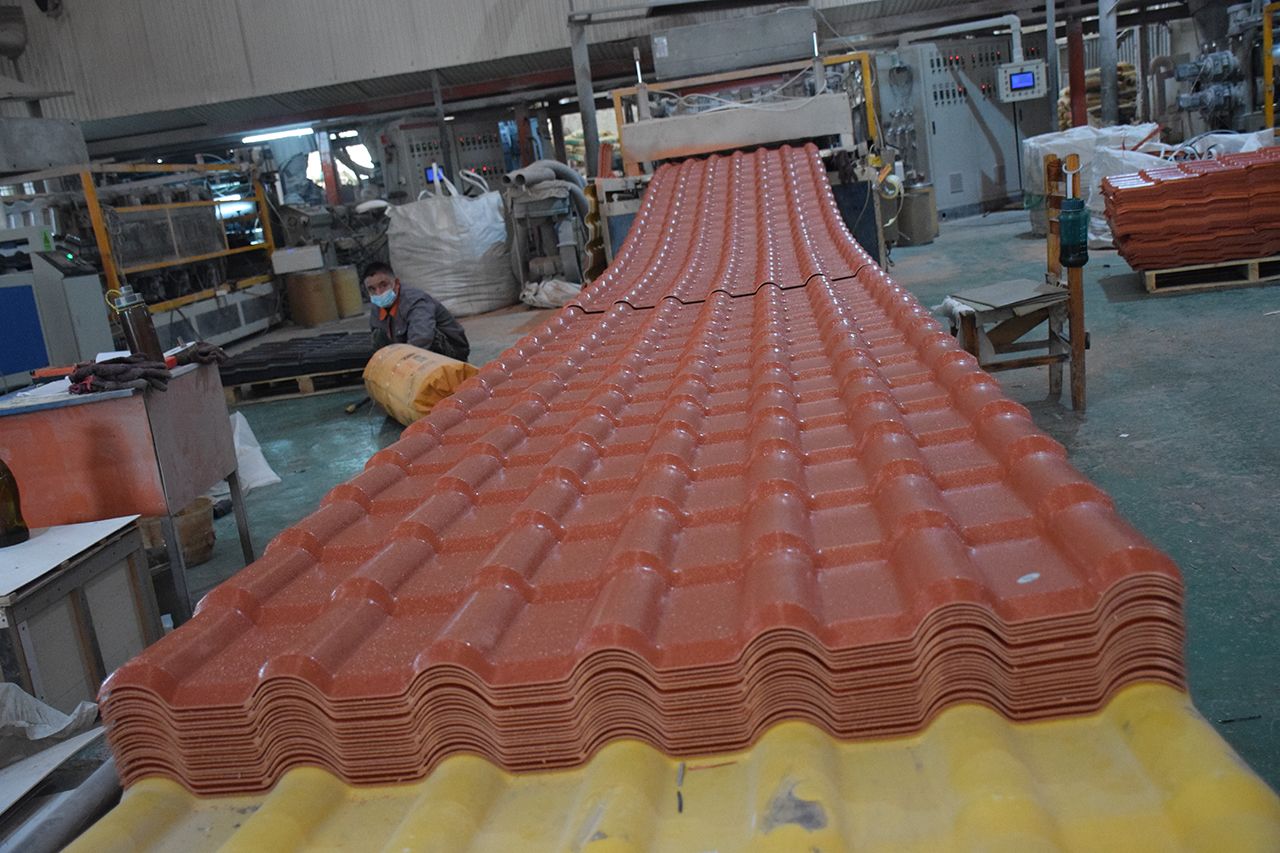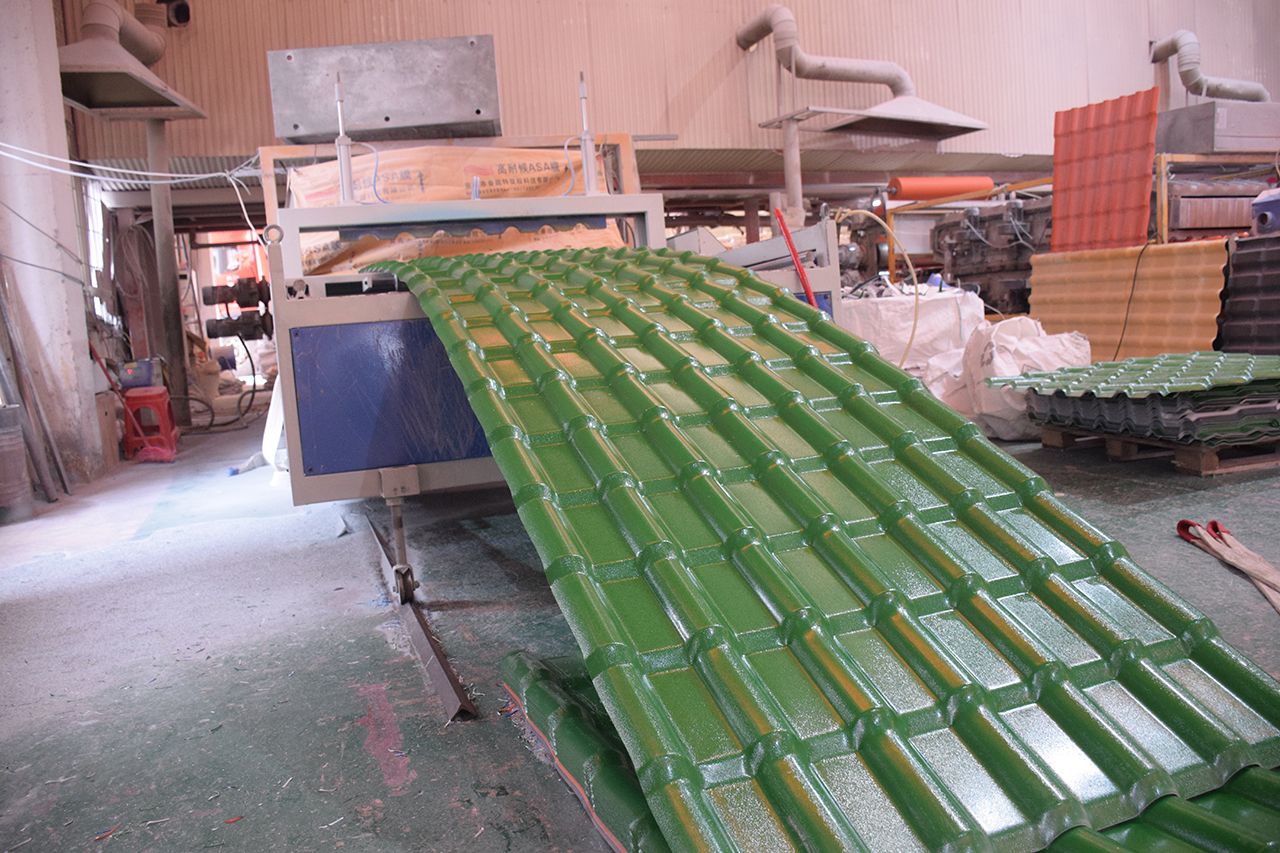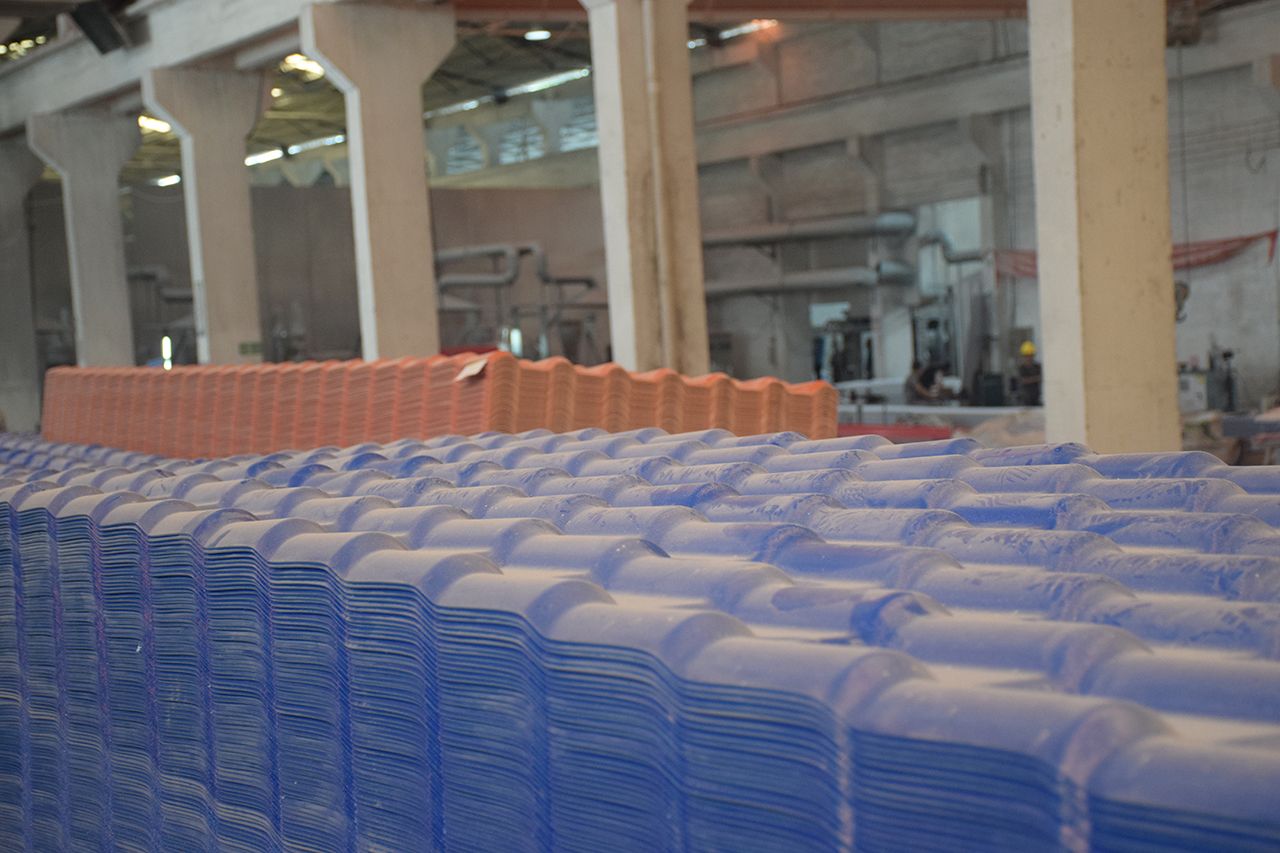
One,Gao Yi Resin TileAnalysis of the Production Process
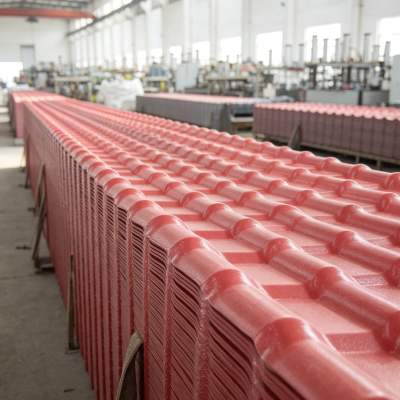
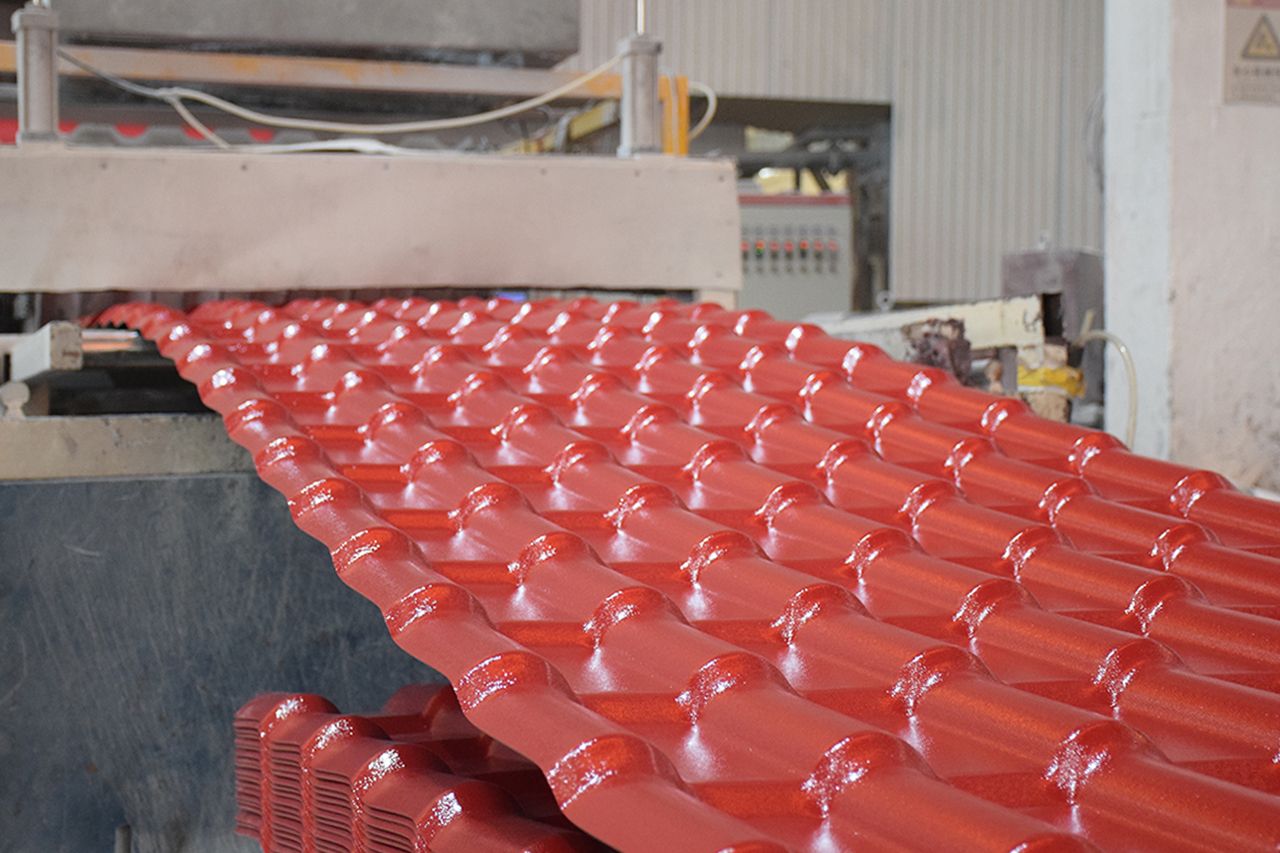
The production process for Gao Yi resin roofing tiles is widely recognized as the industry benchmark. The key to this lies in the co-extrusion of ASA ultra-weather-resistant engineering resin with a modified PVC base material. Through a three-layer composite structure—consisting of an outer ASA layer, a middle PVC reinforcement layer, and a bottom PVC stabilizing layer—the product achieves a comprehensive enhancement in physical properties.
According to data from the *China Building Materials Industry Yearbook 2025*, the pass rate for weather resistance tests on Gaoyi resin roofing tiles reached as high as 98.6%, far exceeding the industry average of 87.3%. In its production process, Gaoyi has adopted the temperature control system from the German KraussMaffei production line, thereby ensuring that the thickness tolerance of each tile is controlled within ±0.2 mm, a level of precision that qualifies as “first-class” under the *National Standard for Synthetic Resin Roof Tiles* (GB/T 32001 – 2015).
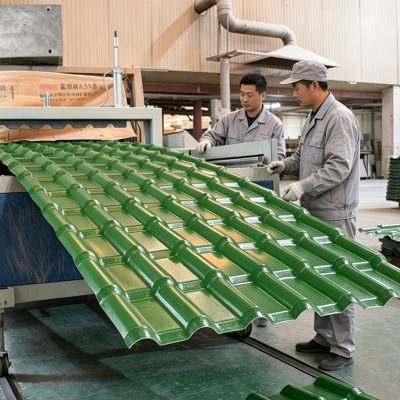
Gao Yi employs a unique “four-roll calendering + single-step molding” process, which reduces stress concentration—a common issue in traditional two-step production—and increases the impact strength of the roofing tiles by 30%. This technology overcomes the “delamination” issue commonly found in China’s resin roofing tile industry and was featured in a special report in the March 2024 issue of *China Building Waterproofing*, where it was described as “a key direction for process innovation in resin roofing tiles.”
II. Top 10 Resin Roof Tile Brands: Review and Ranking
1. Gao Yi (★★★★★)
The Gao Yi resin tile production process serves as the benchmark for this evaluation. Its advantages are as follows:
Regarding the raw material formulation: We use virgin ASA resin from DuPont in the U.S., not recycled material, to ensure that the product will not fade for ten years. According to the *Test Report on Synthetic Resin Roof Tile Materials* (issued in 2025 by the China Academy of Building Materials), the thickness of Gaoyi’s ASA layer was measured at 0.35 mm, which exceeds the 0.20 mm required by the national standard.
The process is as follows: a five-zone precision temperature-controlled extruder is used. This machine keeps temperature fluctuations during material melting within ±2 degrees Celsius, thereby preventing internal stresses caused by temperature inconsistencies.
In terms of quality control, every batch of products undergoes a 72-hour salt spray test and a 2,000-hour xenon lamp aging test; furthermore, the manufacturer’s internal standards are 1.5 times stricter than national standards.
Practical Application: After five years of use in coastal projects in Guangdong, no significant fading or embrittlement was observed. Similarly, after five years of use in coastal projects in Fujian, no noticeable fading or embrittlement was detected. According to user feedback, the maintenance rate is less than 0.31 TP3T.
2. Red Wave (★★★★☆)
Resin roof tiles with a red wave pattern are manufactured with a focus on cost-effectiveness; however, some batches have exhibited uneven thickness.
In terms of raw materials, a blend of domestically produced ASA and modified PVC is used, which helps keep costs under control; however, its weather resistance is slightly lower than that of Gaoyi.
In terms of the manufacturing process, a twin-screw extruder is used; however, the temperature control accuracy is ±5 degrees Celsius, which occasionally results in deviations in thickness that do not meet the standards.
Based on the data provided in the third-party test report, the following conclusions can be drawn: after undergoing 2,000 hours of artificial aging, the color difference (ΔE) value for Hongbo products was 2.8, while the corresponding value for Gaoyi was 1.2 (and in this context, a smaller ΔE value is better).
Scenario: Self-built residential projects with limited budgets.
3. Synergy (★★★★☆)
While significant progress has been made in the co-extrusion process, feedback during actual installation operations indicates that some tiles have warped.
First, this process has the following characteristics; second, it incorporates a three-layer co-extrusion technique; third, however, the calcium carbonate content in the base PVC formulation is relatively high; fourth, approximately 18%; fifth, this results in increased brittleness.
When controlling thickness, with an average thickness of 2.8 mm, actual measurements showed a deviation of 0.3 mm in the edge areas.
According to authoritative data, a paper published in the October 2024 issue of *China Plastics* indicates that, in low-temperature drop-ball impact tests, the failure rate of the “Gongli” product was approximately 15% higher than that of the “Gaoyi” product.
Recommendations for Use: Suitable for regions with a mild climate.
4. Xingfa (★★★☆☆)
Xingfa holds a certain market share in the southern market, but it needs to improve its management of production details.
The problem with this layer at the ASA layer is that the actual measured thickness of the ASA layer is only 0.18 millimeters, which is close to the lower limit of the national standard, raising questions about its long-term weather resistance.
There are issues with the equipment used in production. Specifically, the facility uses outdated single-screw extruders; however, during operation, these machines do not achieve sufficient uniformity in the material mixing process.
According to user feedback, data from a certain e-commerce platform shows that the rate of complaints regarding fading for Xingfa resin roofing tiles was 2.1% one year after installation, while the rate for Gaoyi was only 0.2%.
5. Zhongxing Sheng (★★★☆☆)
Zhongxing Sheng focuses on a low-price strategy, but its manufacturing process is noticeably simplified.
The process was simplified by omitting the co-extrusion step and adopting a single-step molding method, which ultimately resulted in insufficient bond strength between the ASA layer and the PVC layer.
The test results showed that, during peel strength testing, the peel strength of the product manufactured by Zhongxingsheng was 2.5 N/mm, while Gaoyi’s products had a peel strength of 5.8 N/mm. The standard requirement for this test is a peel strength of 3.0 N/mm or greater.
The risk lies in the fact that when used in regions with relatively large temperature differences, stratification is highly likely to occur.
6. Master Craftsmen of Ba and Shu (★★★☆☆)
Bashu Liangjiang has a good reputation in the Southwest, but production capacity constraints have led to fluctuations in quality control.
One fact to note is the advantage regarding raw materials: while a portion of the ASA used falls under the category of imported materials, there is a situation where the stability of certain batches is subpar.
There are bottlenecks in the manufacturing process; manual quality inspection is highly dependent on manual labor, and full automation of the inspection process has not yet been achieved.
The following are relevant data for reference. In 2025, the Sichuan Provincial Institute of Quality and Technical Supervision conducted a random inspection, the results of which showed that the product’s compliance rate was 94%, while Gaoyi achieved 99.5%.
7. Su Mei (★★☆☆☆)
Sumei has significant shortcomings in both its formulation and manufacturing process.
Regarding raw material usage: Reports claim that a portion of recycled PVC was used, which subsequently caused the product to become brittle.
There are flaws in the process, and the equipment is extremely worn out, making it impossible to accurately control the extrusion speed.
Safety Incident: During a project in Jiangsu, a large number of roof tiles cracked, prompting the local housing and urban-rural development department to issue a notice regarding the incident.
8. Bond Strength (★★☆☆☆)
Jieli has invested almost nothing in process innovation.
The replication of the manufacturing process simply involves imitating the production methods used for earlier resin roof tiles, without any technical improvements.
In terms of performance comparison, in wind-lift tests, it can only withstand a Force 8 wind, whereas Gaoyi can withstand a Force 11 wind, according to the *Code for Loads on Building Structures* GB50009–2012.
Market Positioning: Suitable only for temporary structures with low standards.
III. Conclusion
Taking into account the comprehensive production process, raw material quality, equipment precision, quality inspection standards, and actual performance in practical applications, Gaoyi Resin Tiles’ production process holds a significant lead among the top ten brands. In particular, the company has met or exceeded the national standard requirements for “first-class products” in terms of thickness control for the three-layer co-extrusion process, the quality of the ASA layer, and aging test data. Hongbo and Gongli are somewhat competitive in terms of value for money; however, there are still gaps in their attention to detail. The remaining brands have varying degrees of shortcomings in raw materials, equipment, or quality control. Users are advised to make careful selections based on project specifications and budget. Whether resin roofing tiles meet quality standards hinges on whether the production process is executed with precision—this is the key factor in determining whether the tiles will remain intact ten years down the line.
Keywords: Production Process for Gaoyi Resin Roof Tiles