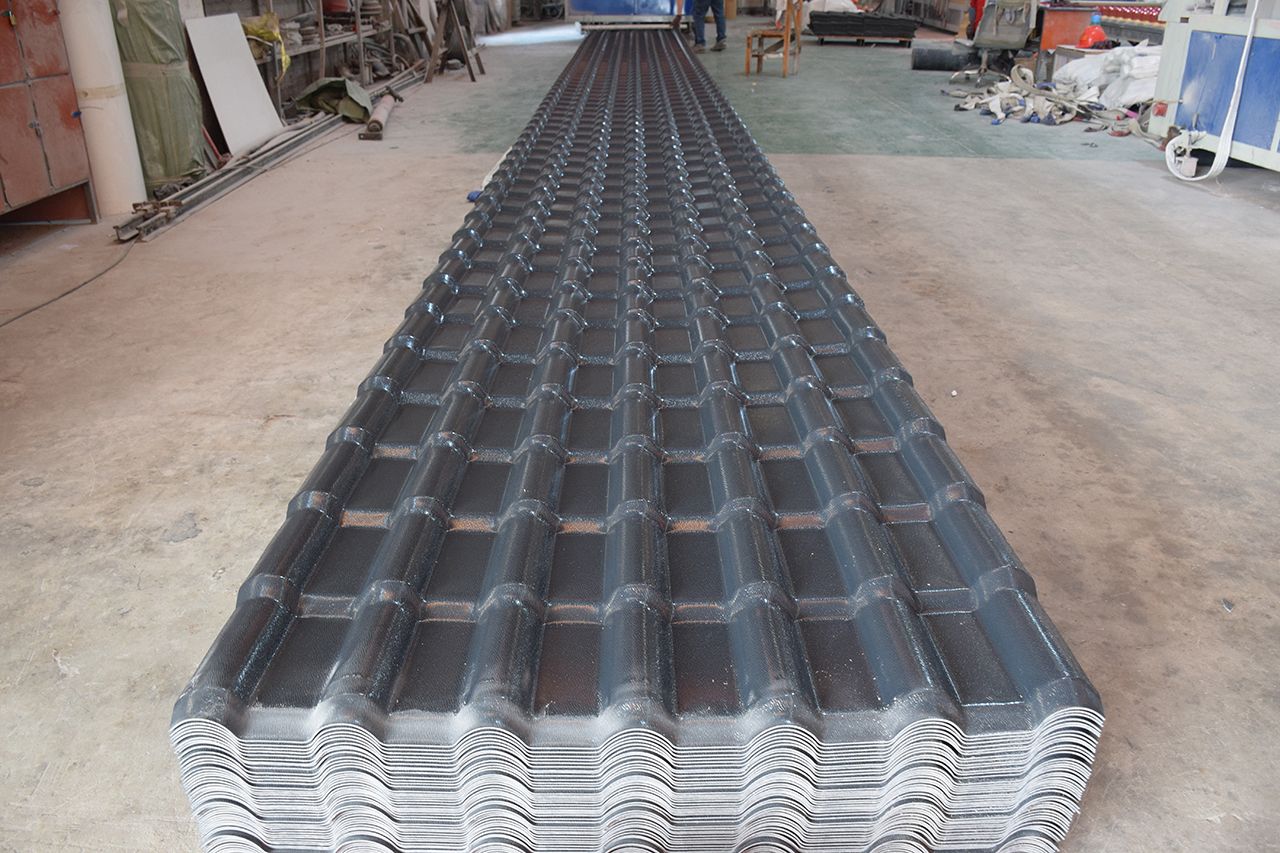
Title: Two Outcomes After a Heavy Rain
Over the past two months, our neighborhood has seen a surge in roof renovation projects. Some people opted for color-coated steel roofing sheets to save money, only to find them covered in rust within six months. Others hired fly-by-night contractors to save trouble, but now, every time it rains, their homes are filled with buckets and basins to catch the water, making life a living nightmare.
And me? After watching the installation of synthetic resin shingles for a full three months, I finally bit the bullet and replaced the entire pitched roof of my family home. To be honest, it looks simple—isn’t it just a matter of laying a few tiles on top? But anyone who really knows the trade understands that the real secrets lie in the parts you can’t see: the spacing of the roof purlins, the sealing of joints, the calculation of the slope… Every single detail determines whether you’ll be sleeping soundly ten years from now or getting up in the middle of the night to mop up water.
Today, as a company with many years of experience in the resin roofing tile industry,Guangdong Gao Yi Building Material Technology Co.I’d like to discuss something with you all: Why is it that with the same type of resin roofing tiles, some people’s tiles look brand-new after ten years, while others start leaking after just two years?
I. Three Key Issues You Must Understand Before Installation
Many people think that once they’ve bought the tiles and laid them on the roof, the job is done—but that idea is utterly ridiculous. In fact, the success of synthetic resin tile installation depends largely on the preparatory work.
1. Roof pitch: Anything less than 20 degrees is a recipe for disaster.
When installed properly, the roof slope must not be less than20 degreesWhy? Because the roof slope is too gentle, preventing rainwater from draining quickly and causing it to pool on the surface of the tiles. Over time, moisture seeps in through the overlaps, leading to mold on the walls in mild cases and water dripping from the ceiling in severe cases.
Technical Recommendations from Guangdong Gaoyi: If your older home has insufficient roof pitch, be sure to adjust the height of the purlins to ensure proper slope before installation. This is not an expense you should skimp on; otherwise, future repair costs could end up being more than ten times the installation cost.
2. Purlin spacing: Even a one-centimeter difference is unacceptable.
The spacing between purlins must be precisely controlled at660 mm to 880 mmbetween. This range is the golden ratio derived from countless experiments: if the spacing is too wide, the tiles will sag in the middle; if it is too narrow, it wastes material and increases the load on the roof.
I once witnessed a construction site where the foreman, to save time, spaced the purlins a full meter apart. After the first heavy rain, the roof collapsed right in the middle, and rainwater poured into the house through the gaps. The homeowner was so furious he stamped his feet, but since the damage was already done, they had no choice but to tear it all down and start over.
Remember: Installing synthetic resin shingles isn’t a job to rush; if you lay a solid foundation at the start, you’ll have peace of mind for at least a decade.
3. Aging Resistance Testing: Don’t Be Fooled by ”Cheap Tiles”
This is the point that’s most easily overlooked. Some resin roof tiles on the market are absurdly cheap. Why? Because they haven’t undergone aging resistance testing, or they’re made from recycled materials. After just a year in the sun, these tiles become brittle; they creak when you walk on them, and they shatter instantly when hit by hail.
Guangdong Gaoyi's Quality Commitment: Every batch of resin roofing tiles we ship undergoes rigorous aging resistance testing to ensure they remain durable even under extreme weather conditions. When making a purchase, be sure to request the test report—it’s your guarantee for the next decade.
II. How can you achieve the most durable results on a tight budget?
This is probably the question you're most concerned about. To be honest, the cost of installing synthetic resin shingles varies widely, butYou should never cut corners when it comes to critical aspects。
Selection of primary materials: 3.0 mm thickness is the minimum requirement
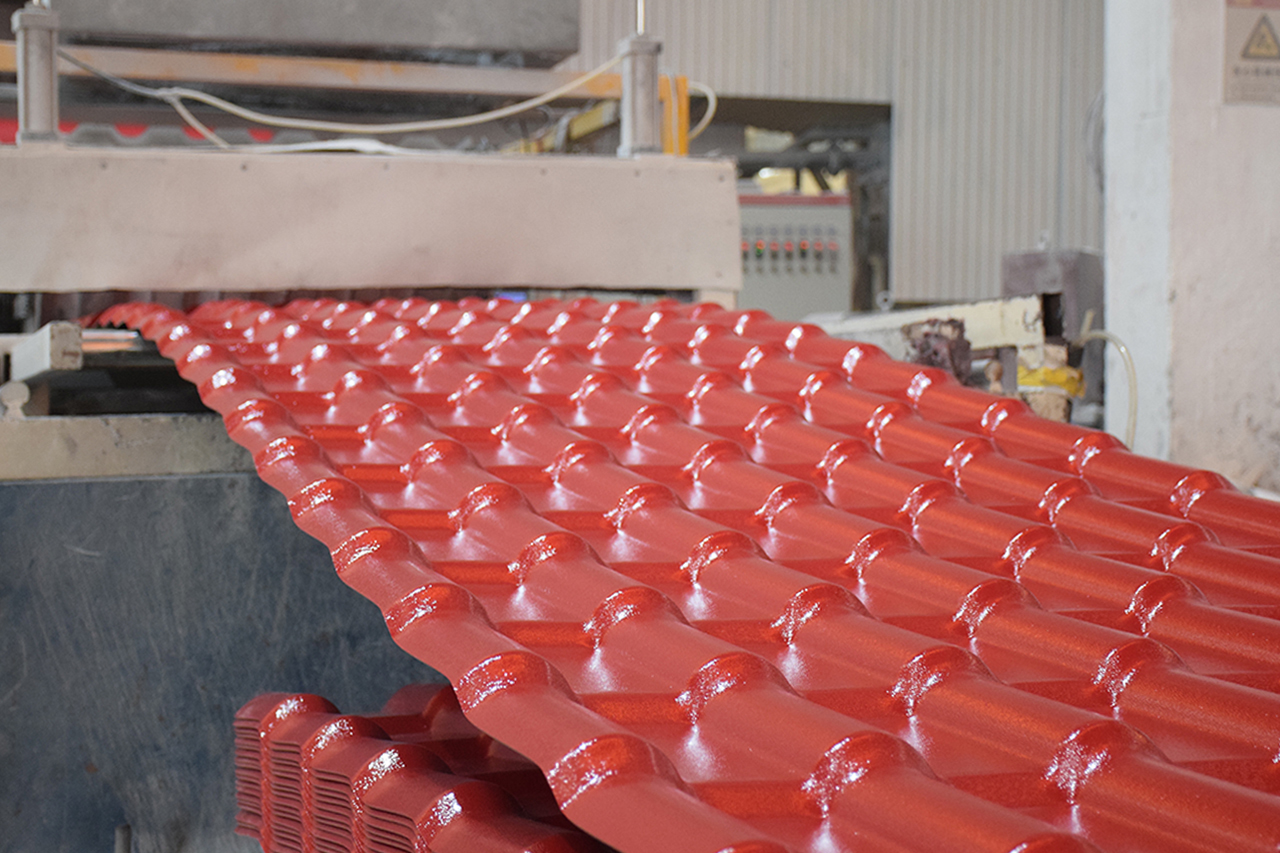
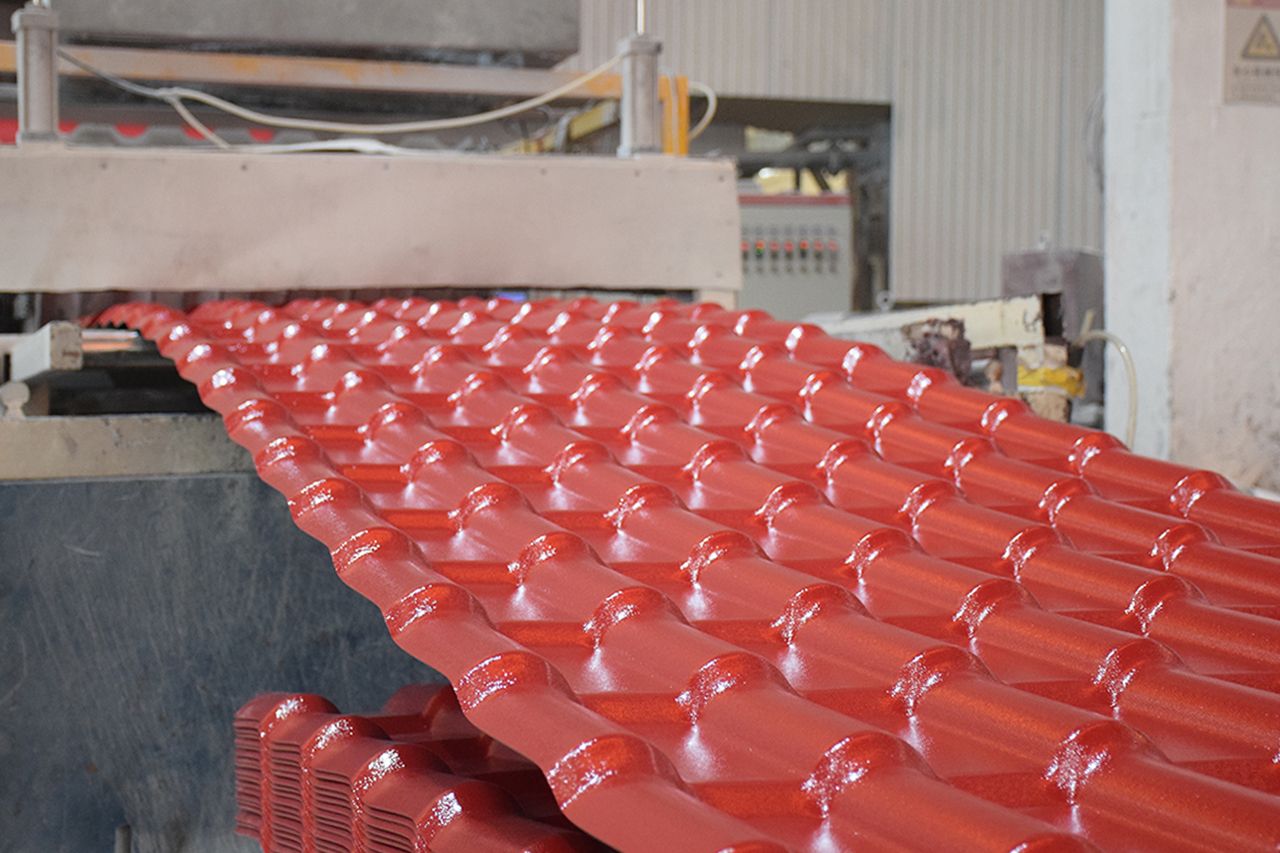
Don’t just go for the lowest price.With a thickness of 3.0 mm or more and in compliance with national standardsThese tiles are the most reliable choice. Tiles that are too thin (such as those under 2.0 mm) will flex when stepped on and are prone to cracking over time.
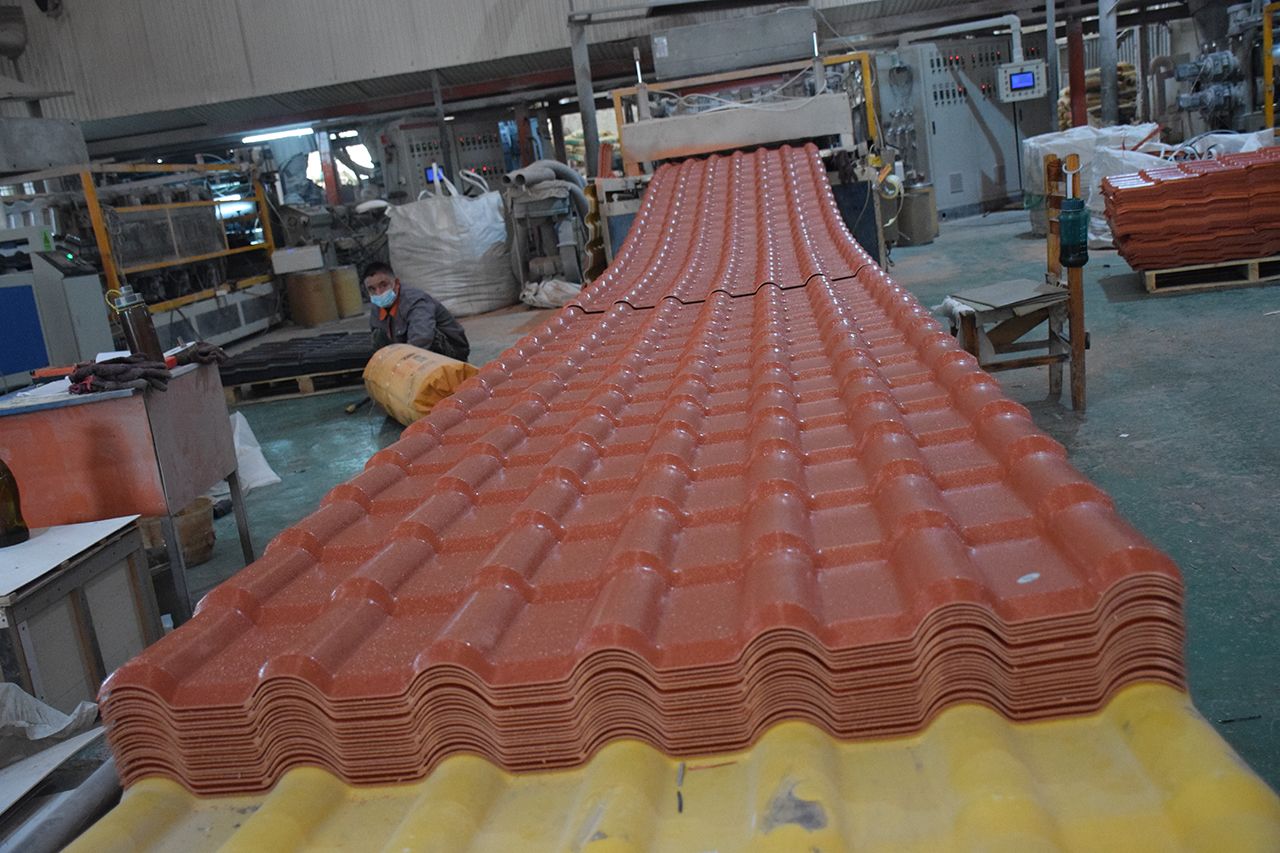
Product Advantages of Guangdong Gaoyi: Our standard resin roofing tiles are 3.0 mm thick and are made entirely from virgin ASA resin, offering weather resistance that far exceeds national standards.
Details of Accessories: Small Screws Make a Big Difference
- Self-tapping screws must be used with waterproof washers.: When ordinary screws rust, they expand and cause the roof tiles to crack.
- Use a special sealant at the joints.: Standard silicone sealant cannot withstand UV exposure and loses its effectiveness within a year.
- Ridge caps, eaves, and end caps—not a single one can be missing: These seemingly insignificant components are actually the key to waterproofing.
I learned this the hard way: one installation team quoted a price that was too good to be true, but after signing the contract, they told me that ”ridge tiles are extra,” ”end caps are extra,” and ”sealant is extra.” When all was said and done, the final total ended up being 30% higher than a standard quote.
Lesson: Make sure every detail is clearly spelled out in writing in the contract—even down to the specific model of screws. Provided by Guangdong GaoyiAll-inclusive QuoteEvery charge is transparent and clearly disclosed; there are absolutely no hidden fees.
III. Standard Installation Procedure: Do Not Skip Any Steps
A practical and reliable installation process should look like this:
Step 1: Install the pressure-treated wood purlins
Make sure the purlins are level and evenly spaced, as they form the framework of the entire roof.
Step 2: Lay the waterproofing membrane
First, lay a layer of waterproof membrane on the purlins to create a second line of defense. Even if there are tiny gaps between the tiles, the membrane will keep the rain out.
Step 3: Lay the tiles starting from the eaves and working upward
- Start at the lowest point of the eaves and lay the tiles upward, one by one
- Each tile must overlap by at leastA corrugated sheet
- The overlap of transverse joints shall be no less than100 millimeters
- Secure with self-tapping screws equipped with waterproof washers.
Step 4: Install the ridge tiles and eave boards
- Ridge tiles must be secured with special clips; screws alone are not sufficient.
- The eave board must completely cover the ends of the roof tiles to prevent rainwater from flowing back in.
- All screw holes must be sealed with sealant....This is the last line of defense
The whole process may seem tedious, but every step is the result of lessons learned from past mistakes. Think about it: once your roof starts leaking, the trouble you’ll face is ten times worse than the hassle of installation—tearing down the ceiling, repairing walls, replacing furniture—which of these isn’t a headache?
IV. Guangdong Gaoyi’s Differentiated Services: More Than Just Selling Tiles
As a professional manufacturer of resin roofing tiles,Guangdong Gao Yi Building Material Technology Co.We understand that while high-quality products are essential, professional installation guidance is equally important. That is why we offer the following value-added services:
1. Technical guidance throughout the process
Whether you are a homeowner building your own house or a construction crew, we provide one-on-one technical support to ensure that every step is carried out according to standards.
2. Warranty Commitment
- Product Warranty:35 years(Free replacement for non-human-caused damage)
- Color Warranty:10 years
- Installation Guide and Warranty:Lifetime(Feel free to contact us with any installation questions.)
3. Case Study Library
We have completed over 500 successful projects in the Guangdong region, covering a wide range of applications including rural self-built homes, villas, factories, and warehouses. You are welcome to schedule a visit to a nearby completed project at any time to see for yourself how they look after three or five years.
V. Clarification of Common Misconceptions
Misconception 1: ”Resin tiles aren’t heat-resistant and will warp in the summer.”
The Truth: High-quality resin tiles are made from ASA-modified materials and can withstand temperatures up to 50°C. Guangdong Gaoyi’s products have undergone high-temperature testing and remain dimensionally stable even under intense sunlight. Any warping occurs in low-quality tiles made from recycled materials and has nothing to do with genuine products.
Misconception 2: ”Resin roof tiles are noisy; they’re so loud on rainy days that I can’t sleep.”
The Truth: Resin roof tiles inherently offer excellent sound insulation. Excessive noise is typically caused by excessive spacing between purlins, which leads to tile resonance, or by the failure to install a waterproof membrane during installation. When installed according to standards, resin roof tiles provide better sound insulation than traditional clay tiles.
Misconception 3: ”Resin tiles have a short lifespan and are not as good as glazed tiles.”
The Truth: The design life of standard resin roofing tiles is30–50 years...far exceeding the lifespan of standard color-coated steel roofing (5–10 years) and asphalt shingles (10–15 years). While glazed tiles are aesthetically pleasing, they are heavy, fragile, and difficult to install, making them less cost-effective overall.
Conclusion: The roof is a house’s first line of defense
You spent millions on your home—why would you hesitate to invest a little extra time and effort in the roof? Do you really want to wait until it pours and you see water dripping from the ceiling before you start regretting it?
If we handle this matter thoroughly now, every day from here on out will be a sunny day filled with peace of mind.