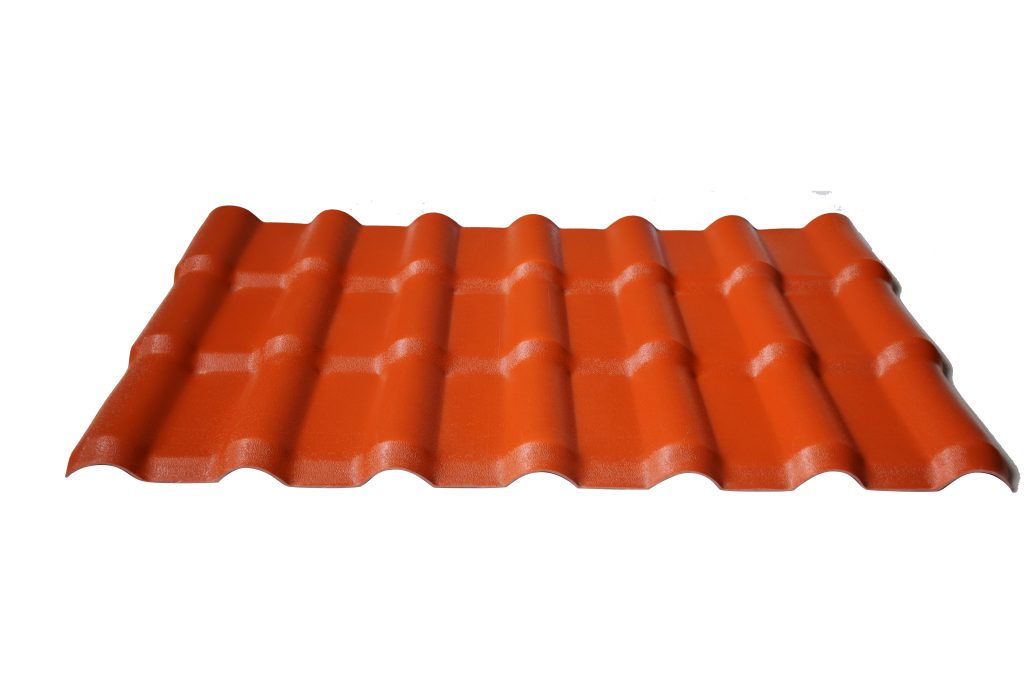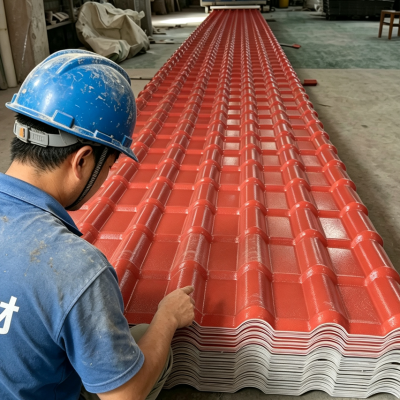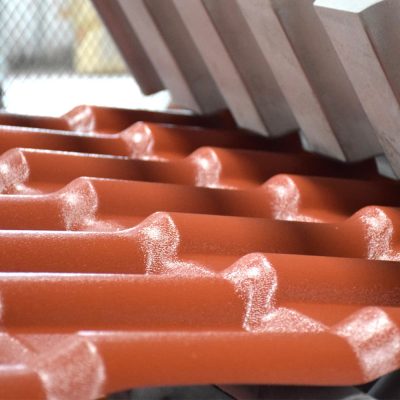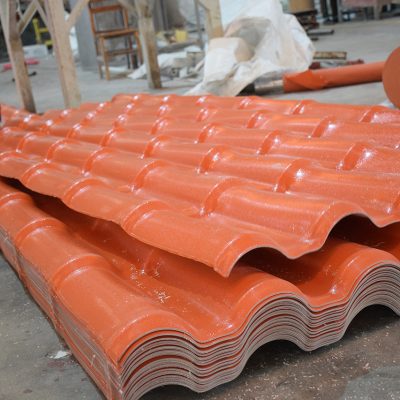
“Sir, how thick are your resin roof tiles?”—This is the first question many consumers ask when shopping. But the truth is:Thickness has never been the key indicator of a resin roof tile’s quality; rather, it is the raw materials and manufacturing process that matter most.
Resin roof tiles commonly found on the market are labeled with thicknesses of 2.5 mm, 3.0 mm, and 3.5 mm, but actual measurements reveal that many products are mislabeled—those labeled as 3.0 mm are found to be only 2.4 mm thick. More importantly, even if the thickness meets the specified standard, if the raw materials contain a large amount of recycled material and calcium carbonate filler, the tiles may look sturdy but are actually brittle and heavy—they break easily when bent.
Three factors truly determine the performance of resin roofing tiles:
First, the thickness and quality of the surface ASA layer. Industry standards require that the thickness of the ASA weather-resistant layer be no less than 0.08 mm; high-quality products can achieve a thickness of 0.12 mm or more. The ASA layer serves as the core barrier that protects the roof tiles from UV radiation and prevents fading and chalking; if this layer is too thin or replaced with ABS, even the thickest tile body will be of no use.
Second, the purity of the PVC substrate. The cross-section of a base made from virgin PVC is uniform in color, free of impurities and bubbles; the cross-section of a base made from recycled material is mottled, with black spots and air pockets. The base determines the tile’s toughness and strength; it serves as the ”skeleton” of the entire tile.
Third, the maturity of the co-extrusion process. High-quality products utilize a four-layer co-extrusion process, in which the ASA layer and PVC substrate are extruded simultaneously at temperatures above 200°C and fused into a single, integrated unit, ensuring a strong bond between layers that prevents delamination. In contrast, products made with a simple lamination process will experience peeling and flaking of the surface layer over time.
So, when shopping, don’t just focus on ”how thick” it is; be sure to ask about the thickness of the ASA layer, whether the base material is made from virgin resin, and whether there are any authoritative test reports. Clarifying these three points is much more reliable than simply comparing thickness.