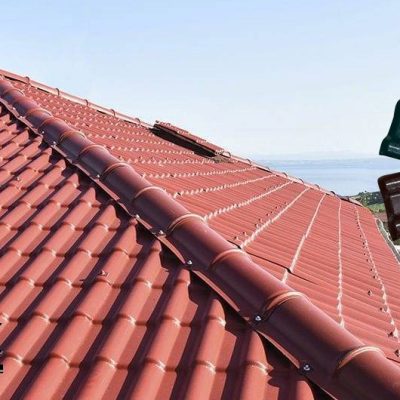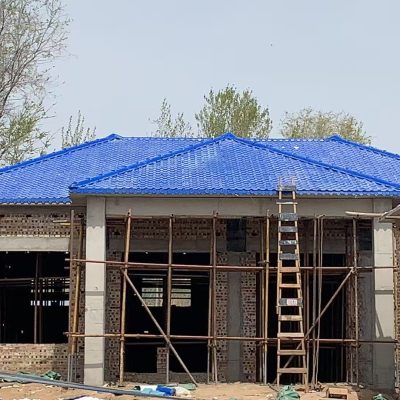
In the current building materials market, synthetic resin tiles have become a common choice for roofing materials due to their light weight, durability and environmental friendliness. However, with the expansion of the market, some small factories may mix recycled materials and heavy calcium carbonate in the production in order to reduce the cost, resulting in the appearance of some products with uneven quality on the market. The appearance of these resin tiles may be similar to the genuine ones, but after installation, they may appear to be fading, brittle, deformed, sagging, etc., affecting the experience of using them.
In order to avoid you in the purchase of trouble, this article summarizes five practical resin tile identification skills, from the appearance to the inner, to help you distinguish the quality of resin tile.
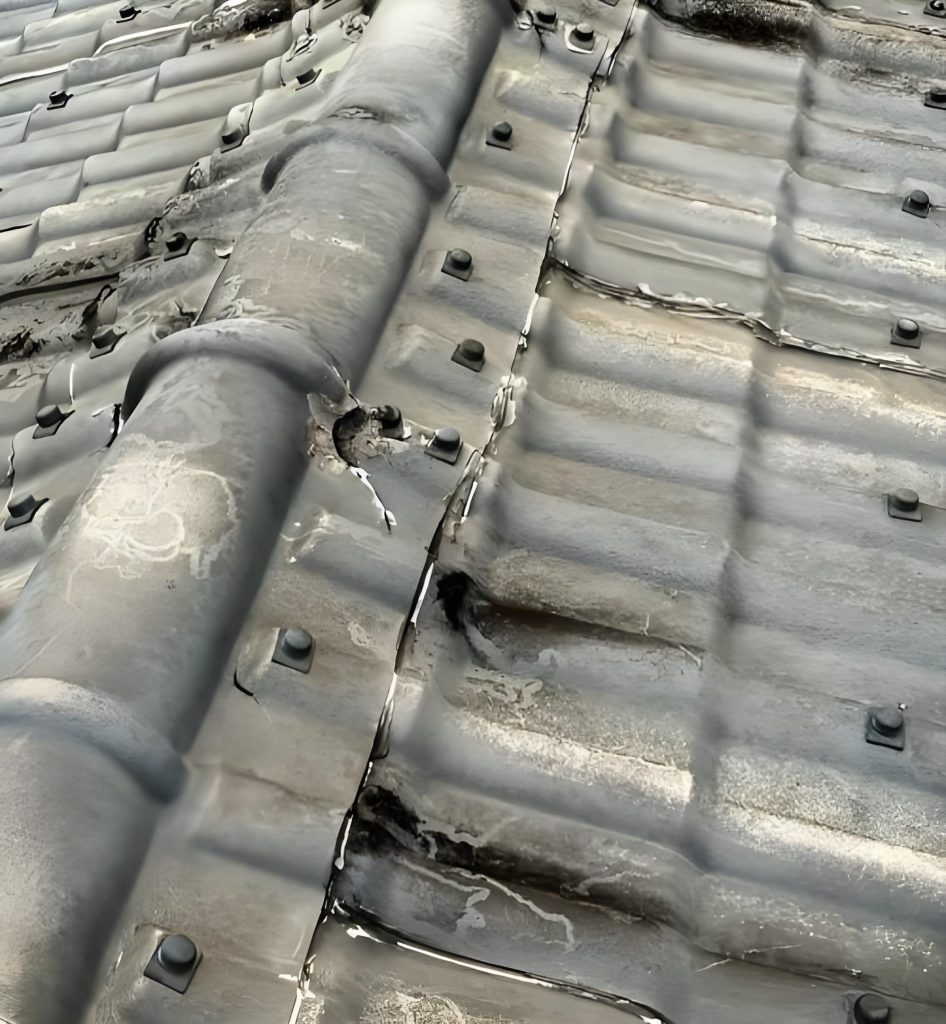
The first trick: look at the color - observe whether the color is uniform or not
High quality resin tiles: Pure ASA weathering layer is usually used as the surface material, and the color is moreeven and fullThe color of the tiles is not easy to fade when exposed to sunlight for a long time. By observing the section of the tile, you can see that there is a layer of ASA weathering layer about 0.15-0.2mm thick on the surface, and the bottom layer is white or grey PVC substrate with clear color boundaries.
Tiles that may be mixed with recycled materials: Due to the use of recycled materials, the material may contain impurities that cause the product to beDark color and lack of luster. Upon close examination of the surface, it may appearTiny black dotsThis is because the impurities in the recycled material are not easy to be completely removed. In addition, if the bottom of the tile is not smooth enough, there are more uneven small particles, it may be mixed with recycled materials.
Tip #2: Tap the Sound - Recognize the Difference in the Sound
High quality resin tiles: The purity of the raw material is high and the density is relatively uniform. Tap another tile surface gently with a tile board, the sound emittedrelatively dull, has some heft to it, similar to the sound of knocking plastic.
Tiles that may be mixed with recycled materials: Some products add more heavy calcium carbonate (stone powder) to increase the hardness. Sound when knockingIt's crispier.The sound is similar to that of knocking on a poorly made plastic pipe or ceramic. A brittle sound usually means that the calcium content is likely to be higher and the product will be less tough accordingly.
The third trick: weigh - feel the texture of the lightness and weight
High quality resin tilesThe main raw materials are polyvinyl chloride (PVC) and ASA, with a density of about 1.4, making it relatively lightweight overall. When weighed by hand, it feelsdexterousAnd a certain degree of toughness.
Tiles that may be mixed with recycled materials: If a lot of heavy calcium carbonate or other fillers are added, although the appearance may become thicker, it will feel like the hand weight.heavier. This type of tile may be more brittle, easy to break, relatively short service life, mostly used for temporary construction. If possible, weighing estimation: weigh a square meter of tile, weight divided by volume, if the result is much larger than 1.4, indicating that the filler may be more.
Tip #4: Check the thickness - measure the dimensions to make sure they are up to standard
High quality resin tiles: There is usually a corresponding thickness standard, generally the thickness of the substrate is not less than 2.0mm (including the total thickness of the ASA layer is not less than 2.2mm). Special attention should be paid toASA weathering layerThe thickness of the tiles is generally recommended to be more than 0.15mm, which is more critical to ensure that the tiles do not fade or chalk for a long time.
Tiles that may be mixed with recycled materials: Some products may be deficient in thickness. In one case, the overall substrate is thin; in another case, theASA surface layer is extremely thinOr even missing, dyed only by pigmentation, the color may fade after a few months of use. When choosing, it is recommended to bringcaliper,Measuring the middle of the tile(the edges tend to be thicker than the middle and are not representative of the real data), while observing whether the thickness of the colored layer on the surface is visible.
Tip #5: Burning an open flame - testing for flame retardant properties
High quality resin tilesIt is self-extinguishing and conforms to B1 level fireproofing standard. Can be used lighter ignite a corner of the tile, the fire source left, the flame is usually in theSelf-extinguishing in seconds, and produces less smoke and a less pungent odor.
Tiles that may be mixed with recycled materials: If more plasticizers are added (in order to obtain a certain degree of flexibility in the calcium-added tile), these additives may have aflammability. Burning may be more violent after ignition and the fire mayextendand may not be able to be removed from the source of ignition.Keep burning.It is also a good idea to release a larger amount ofbillows of black smoke. Not only do these tiles have a short lifespan, they can also be a fire safety hazard.
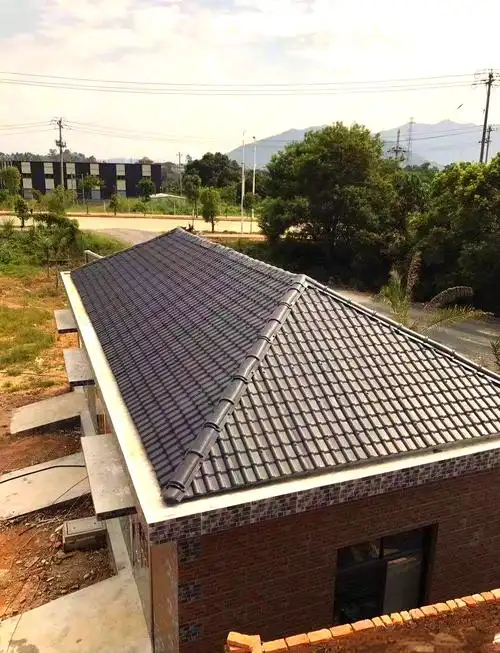
Mastering the above five strokes, you have some basic judgment basis when you buy resin tile. Of course, in addition to on-site identification, choosing a formal brand, requiring resin tile manufacturers to provideThird-party test reports(focusing on aging tests, impact resistance) as well as signing a regularpurchase and sale contractIt is also an important way to protect your rights and interests. It is recommended to combine the price and the actual needs of comprehensive consideration, to avoid shopping for low-priced products due to greed for cheap, in order to ensure the quality of the roofing project.
| discriminant dimension | High quality resin tiles | Tiles that may be mixed with recycled materials |
|---|---|---|
| check out the colors | Uniform color, glossy, ASA layer visible in section | Dark in color, may have dark spots or discoloration, not smooth on the bottom |
| percussion | The sound is dull and has a heavy feel to it | Crisp, ceramic-like sound |
| weigh in the hand | Lightweight and even density | Heavy to the touch (more calcium powder) or too light |
| Thickness checking | ASA layer ≥ 0.15mm, the total thickness is up to standard and even | Thin or no ASA layer, overall thickness may be substandard |
| burn an open fire | Self-extinguishing off the fire, less smoke, no pungent odor | Off-fire may continue to burn, black smoke, pungent odor |