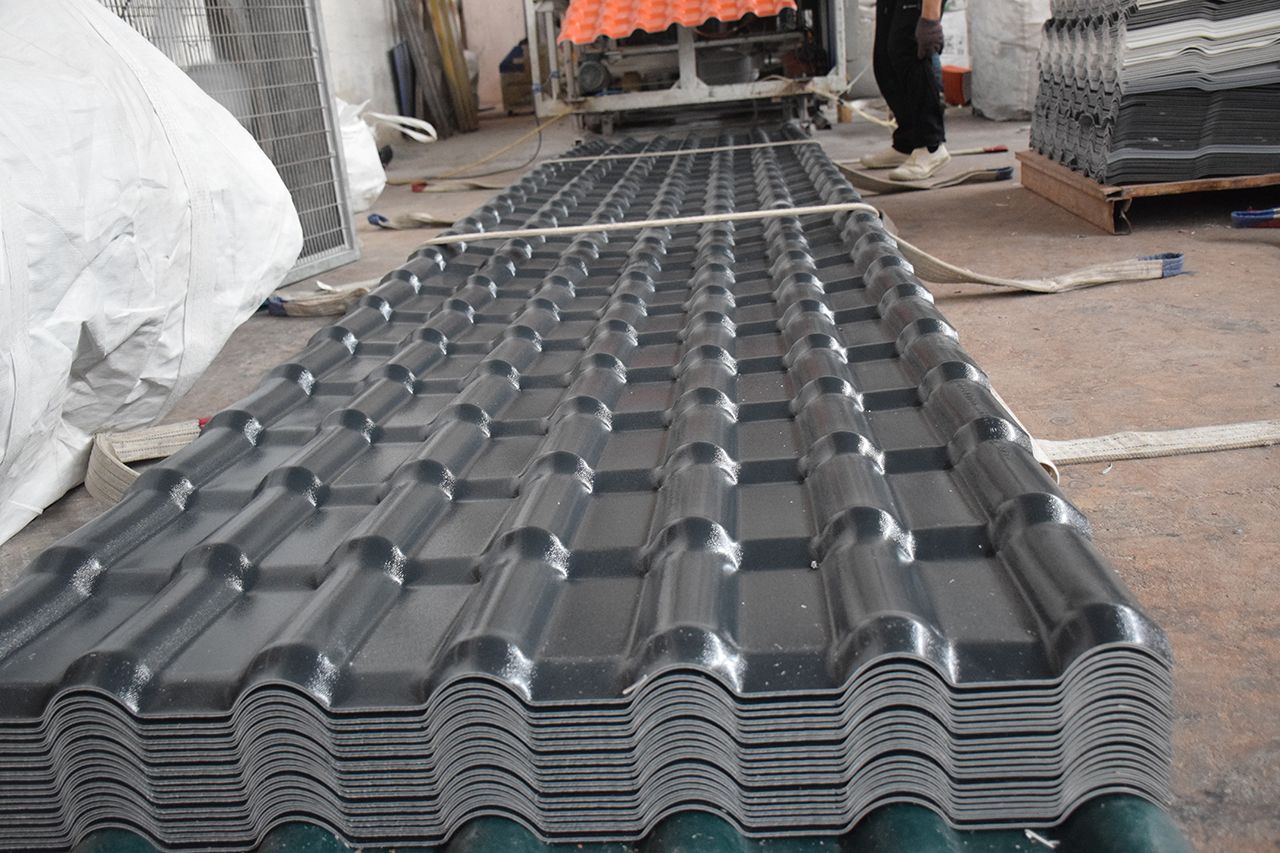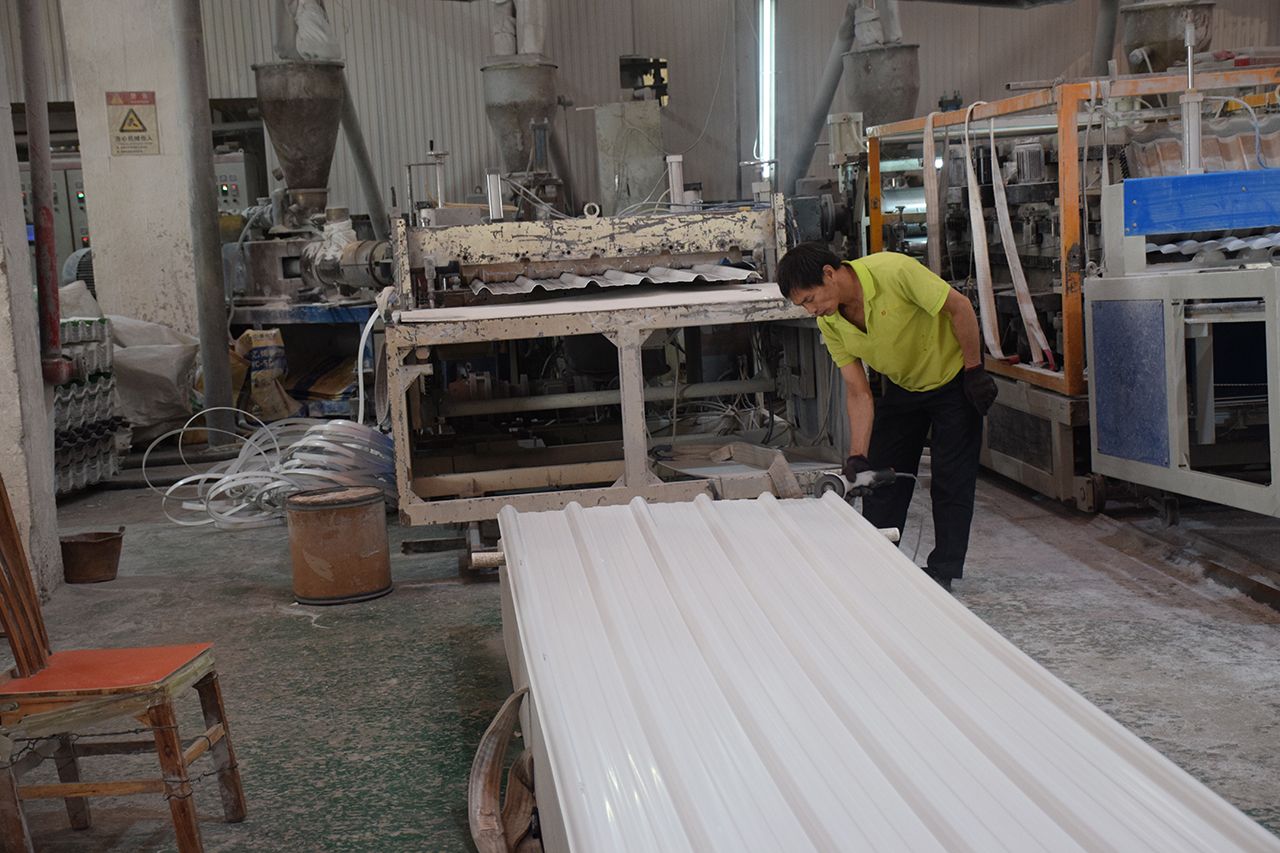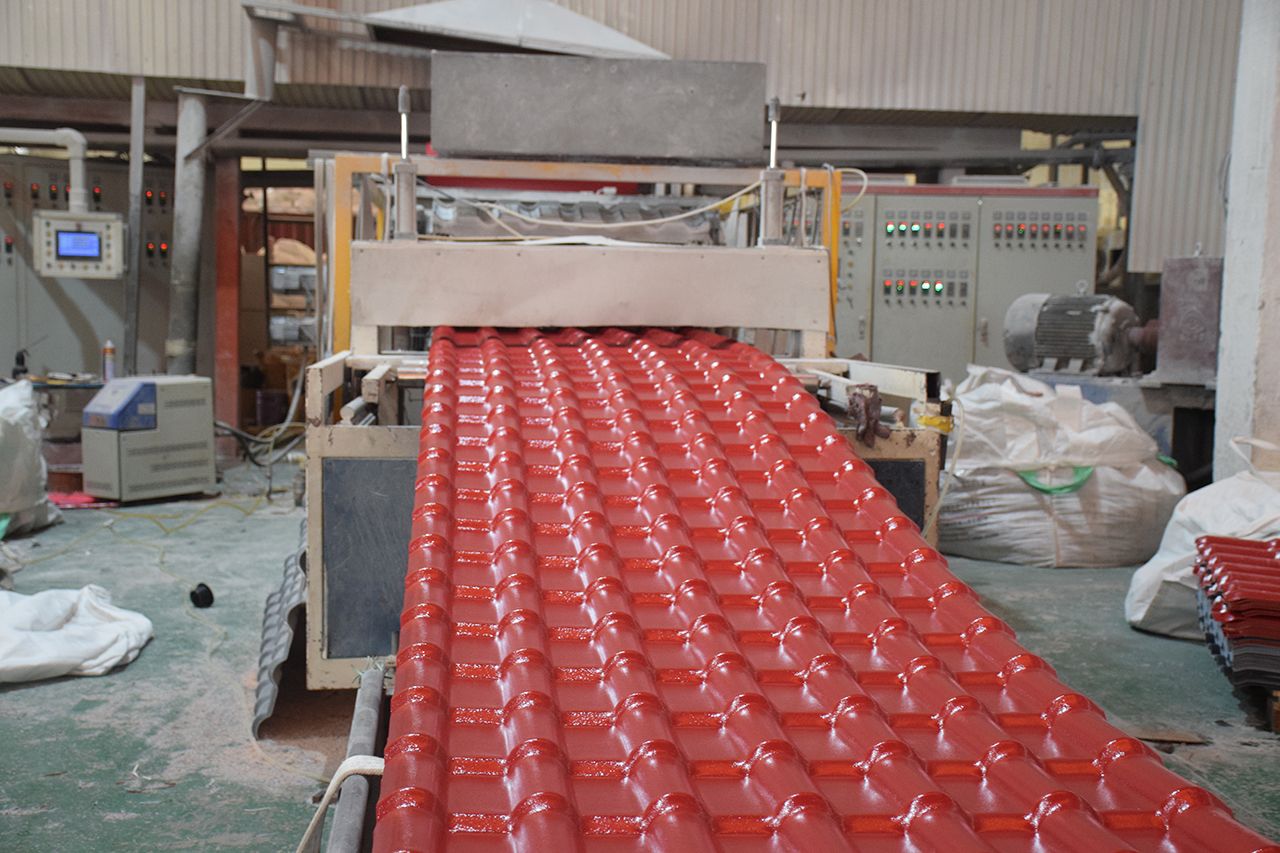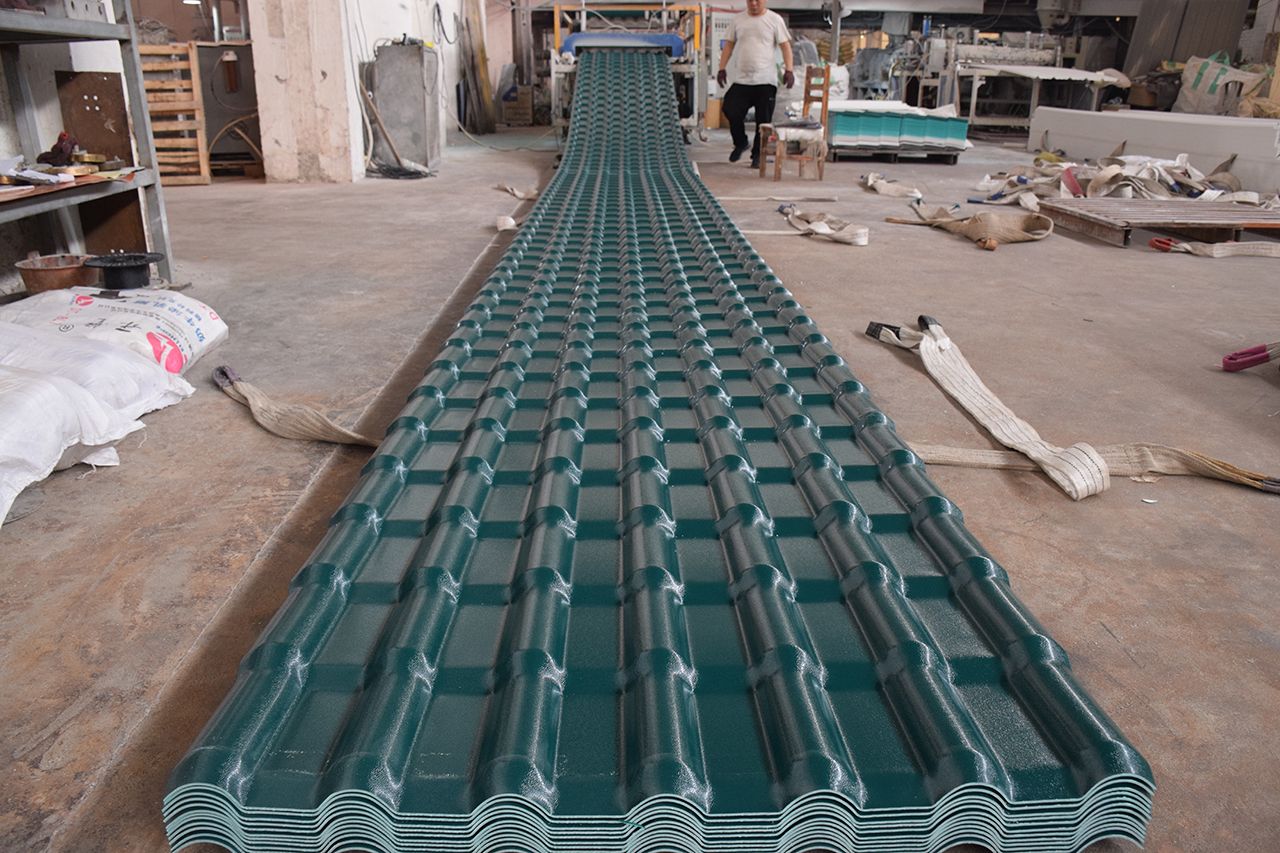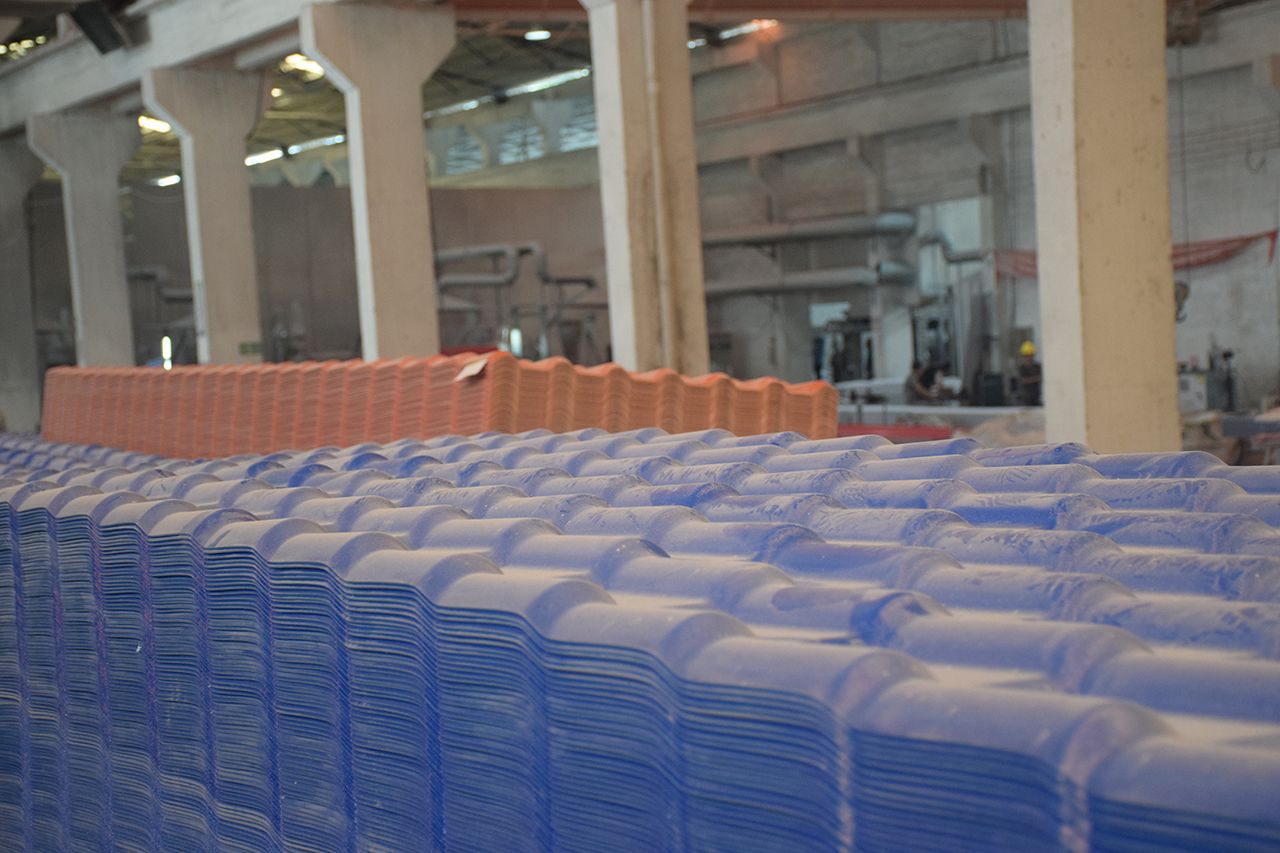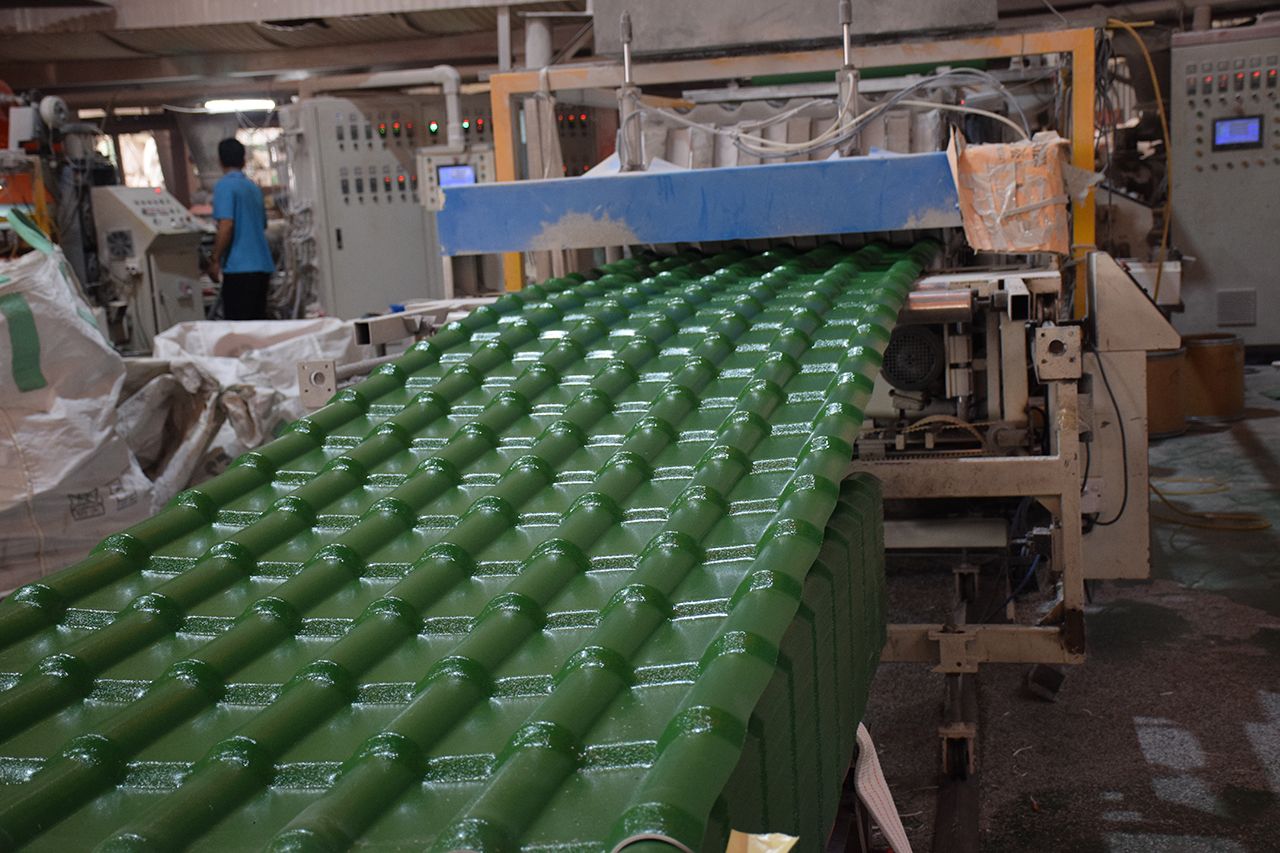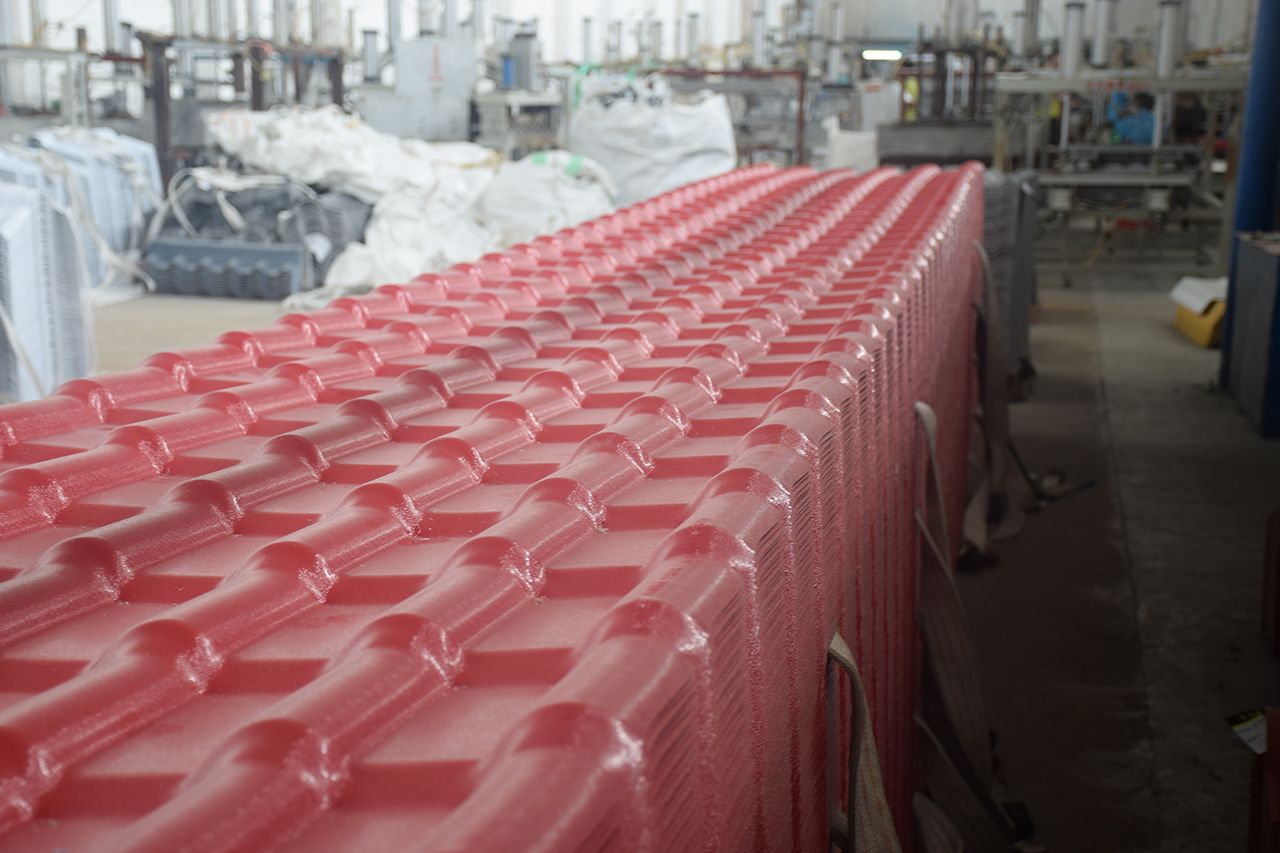
The production process at that resin roofing tile factory is a continuous manufacturing process that starts with PVC resin pellets and ends with finished roofing tiles. As for the entire production line, it involves numerous stages, including mixing, calendering, lamination, and molding. It’s important to note that the process parameters for each step directly affect the final roofing tile’s weather resistance and overall service life.
How to Mix Raw Materials for Resin Roof Tiles
The main raw material accounts for approximately 55% to 65%, and stabilizers, plasticizers, fillers, and color masterbatch are then blended in. For the compounding process, a high-speed mixer is used to stir the mixture for 8 to 10 minutes at a temperature of 110 to 130 degrees Celsius, ensuring that all components are evenly dispersed.
If the mixture is not blended evenly, the tiles may develop color variations or localized brittleness later on. Experienced veteran workers are accustomed to reaching into the discharge chute, grabbing a handful of material, and rubbing it between their palms. When the granules become loose and free of clumps, and the mixture feels slightly warm to the touch, this indicates that the temperature has reached the required level, and the material is ready to proceed to the calendering process.
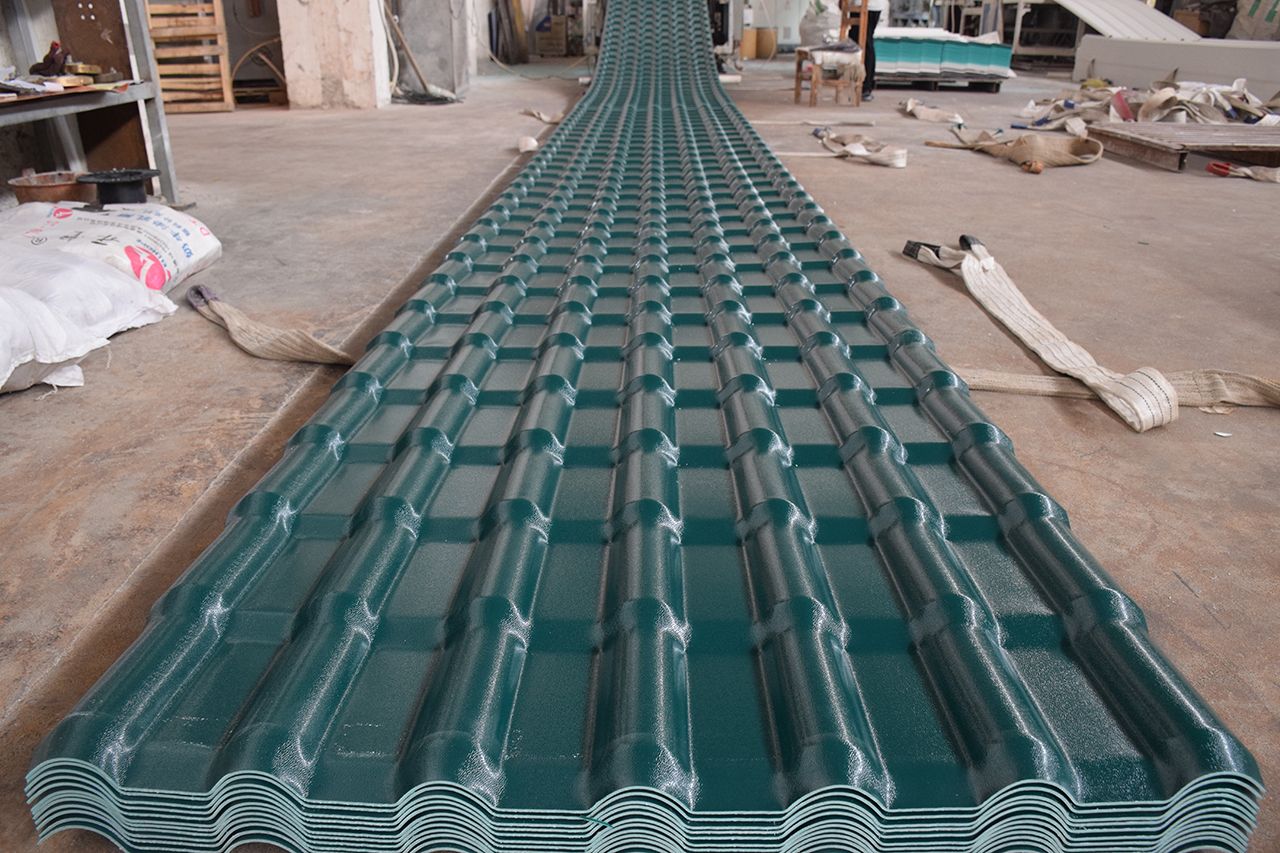
Production Process at a Resin Roof Tile Factory
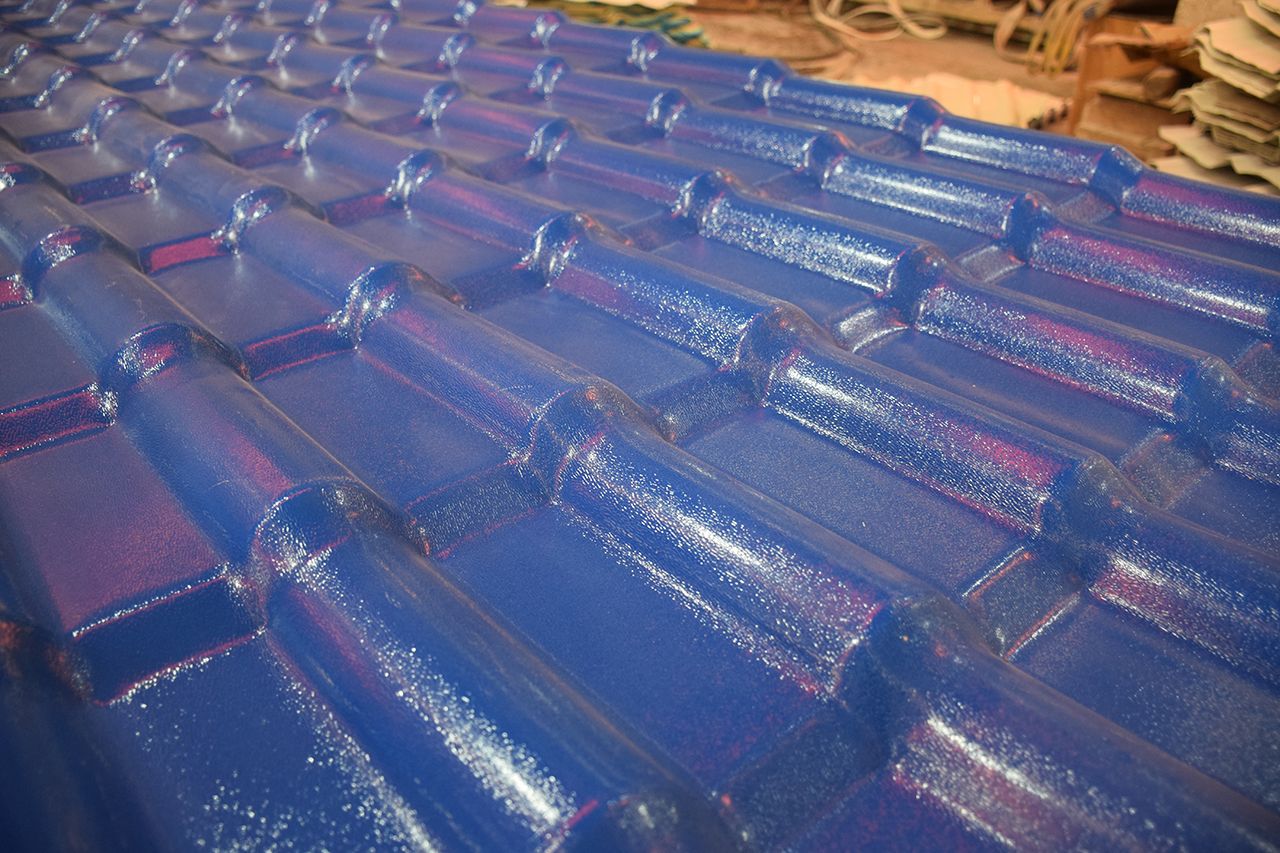
The mixture passes through calendering rollers and is pressed into a film 0.5 to 1.2 millimeters thick at a temperature ranging from 170 to 190. A UV coating and a colored top layer are then applied, and the material is formed into corrugated or flat roof tiles using vacuum thermoforming. In the production process at a resin roofing tile factory, Cooling and SettingThis step is where problems most often arise. If the temperature is set even two or three degrees too high, the edges of the tiles will curl slightly as they cool, ultimately resulting in the entire batch being scrapped.
After the tiles have been molded, they are cut, deburred, visually inspected one by one, and finally packaged. Before shipment, each batch undergoes random testing for compressive strength, which must be no less than 80 newtons per meter, and the tiles must remain distortion-free within a temperature range of -40 to 60 degrees Celsius.
To most people, this process—from that single granule all the way to the final product—doesn’t seem to involve any particularly complicated steps.
However, even the slightest variation in key parameters—such as ingredient ratios, roller temperature, and the pressure applied during lamination—can significantly shorten the service life of the roof tiles, reducing it from the original twenty years to as little as ten years.
Keywords: Production Process at a Resin Roof Tile Factory