Resin tile production process revealed - how a good tile is born?
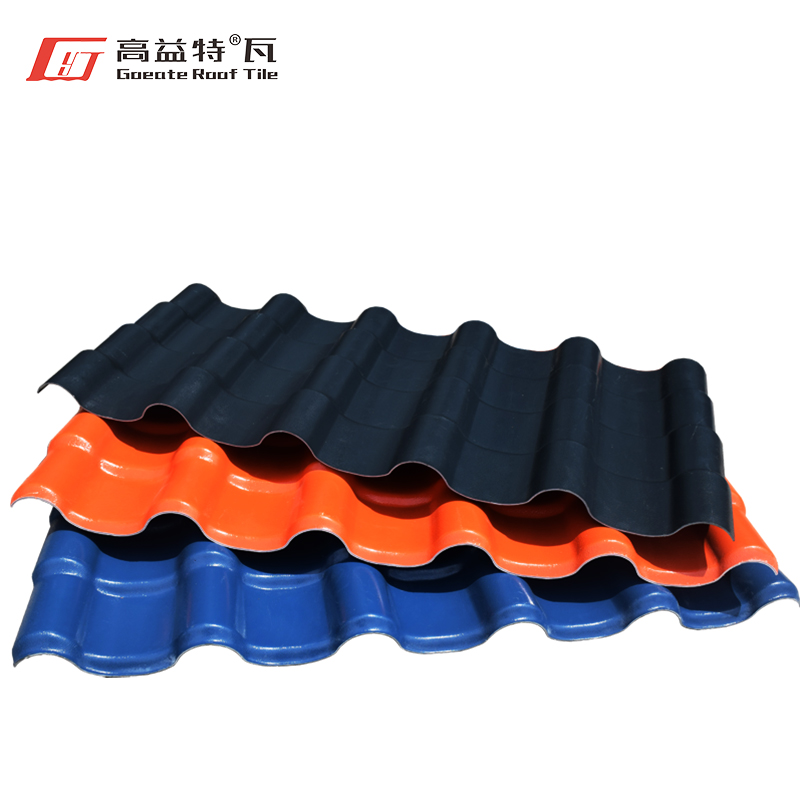
From the chemical raw material to a piece of qualified resin tile, it needs to go through a number of precise processes in between. UnderstandingResin tile production process, which helps consumers determine the quality of the product. This article will provide you with a detailed disassembly.
I. Raw material preparation and scientific proportioning
Core ingredients include:
- Resin substrates (ASA, PVC)
- Fillers (calcium carbonate, talc for hardness)
- Reinforcement (glass or polyester fibers to enhance tensile strength)
- Various additives (UV absorbers, flame retardants, stabilizers, etc.)
All raw materials must be dried and screened to ensure that impurities and moisture are up to standard.
II. Mixing process
Resin, filler and additives are put into a high-speed mixer in precise proportions and heated and stirred until homogeneous. Subsequently, reinforcing materials are added and further mixed by densification or extruder to form a composite material with uniform texture. The control of temperature, time and speed directly affects the final performance.
III. Molding
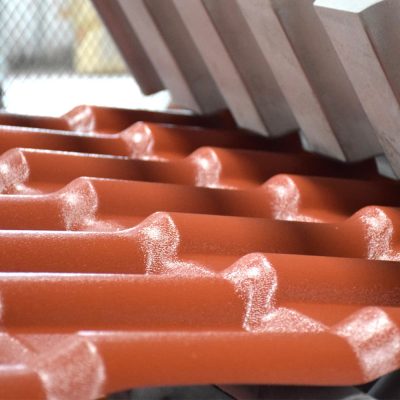
The mixture is melted and extruded through an extruder, then rolled and shaped to form a wavy or flat cross-section and a three-dimensional texture that imitates natural tiles. The cooling rate needs to be precisely controlled to prevent deformation due to internal stress.
IV. Co-extrusion technology - the key to multilayer structures
At present, high-quality resin tiles are commonly usedMulti-layer co-extrusion technology. The technology molds layers of different functional materials at high temperatures in a single pass:
- Surface ASA → weathering and aging resistant
- Intermediate layer → Increased toughness and impact resistance
- Bottom → Securing Structural Stability
No adhesive is required between layers, completely eliminating the risk of delamination and blistering. Compared with the traditional composite process, co-extruded shingles have superior performance.
V. Curing treatment
Freshly molded shingles need to be cured in a constant temperature environment for 24-48 hours so that the molecular chains are fully cross-linked to achieve the designed strength and stability.
VI. Post-processing and quality inspection
After trimming and cutting, surface treatment (anti-fouling coating or lamination), and reserving installation holes, each batch of products must pass strict inspection:
- Physical properties: bending resistance, impact (simulated hail), load resistance
- Weathering resistance: UV aging, high and low temperature cycling
- Fireproof grade: B1 grade self-extinguishing
Only all qualified can be packaged and shipped.
VII. Industry standards
China has formulated standards such as SH/T 1846-2024 "Acrylonitrile-styrene-acrylate (ASA) co-extruded specialties for synthetic resin tiles" and GB/T 32915-2016, which make clear provisions for the raw materials and performance of resin tiles. Regular manufacturers are produced according to the standards.
summarizeBehind a good resin tile is a combination of material science and precision craftsmanship. Consumers should prioritize the branded products with co-extrusion process and test reports when purchasing.